Wednesday, August 13, 2008

Former Director of UK Anti-drug Co-ordination Unit calls for legalisation

The former head of the UK Anti-drug Co-ordination Unit (UKADCU - the Home Office department in charge of drug policy), Julian Critchley, posted to BBC Home Affairs correspondent, Mark Easton's blog last week, 'The War on Drugs' , calling for the legalisation of drugs.

Media Update: 14.08.08

In his post he also reports how those he met during his time at the Unit knew that criminalisation was causing more harm than the drugs themselves. (This comes as no surprise to anyone who has read the damning report from the PM's Strategy Unit from 2003.)


"I think what was truly depressing about my time in UKADCU was that the overwhelming majority of professionals I met, including those from the police, the health service, government and voluntary sectors held the same view : the illegality of drugs causes far more problems for society and the individual than it solves. Yet publicly, all those intelligent, knowledgeable people were forced to repeat the nonsensical mantra that the Government would be 'tough on drugs', even though they all knew that the Government's policy was actually causing harm."

Julian Critchley is to be congratulated for speaking out with such candour on the issue. One can only wonder how many other former civil servants are of the same opinion, but haven't gone public.


we live in hope

There is nothing to suggest that things have changed at the highest level in drug policy development in the UK, even if the name of the department has changed a few times (to show 'something is being done') since Critchley's stint in charge. During the recent 'consultation' on the ten-year drug strategy, the Advisory Council on the Misuse of Drugs described the Government's consultation document thus:

"it is unfortunate that the consultation paper’s ‘key facts and evidence’ section appears to focus on trying to convince the reader of success and progress; rather than providing an objective review and presentation of the current evidence. The ACMD found the consultation paper self-congratulatory and generally disappointing."
Plus ca change...

Critchley, having retrained as a teacher, concludes with the following:

"I find that when presented with the facts, the students I teach are quite capable of considering issues such as this, and reaching rational conclusions even if they started with a blind Daily Mailesque approach. I find it a shame that no mainstream political party accords the electorate the same respect."
Critchley's posts are copied below in full.

73. At 7:25pm on 30 Jul 2008, JulianCritchley wrote:

Several years ago, I was Director of the UK Anti-Drug Co-ordination Unit in Cabinet Office (which sounds a lot grander than it was). Our job was to co-ordinate Government policy across the Departments, supporting the then Drugs "Tsar", Keith Hellawell. I joined the Unit more or less agnostic on drugs policy, being personally opposed to drug use, but open-minded about the best way to deal with the problem. I was certainly not inclined to decriminalise.

However, during my time in the Unit, as I saw more and more evidence of ?what works?, to quote New Labour's mantra of the time, it became apparent to me that the available evidence pointed very clearly to the fact that enforcement and supply-side interventions were largely pointless. They have no significant, lasting impact on the availability, affordability or use of drugs. In the Spending Review we undertook, we did successfully manage to re-allocate resources towards treatment programmes, but even then I had misgivings about the effectiveness of those programmes. Many hear the word "treatment" and imagine medical intervention or "cures", yet many of these programmes were often supported largely by anecdotal evidence of success, and the more successful interventions were simply too expensive to use widely, given other pressures on health budgets.

It seems apparent to me that wishing drug use away is folly. The only sensible cause of action is to minimise the damage caused to society by individuals' drugs choices. What harms society is the illegality of drugs and all the costs associated with that. There is no doubt at all that the benefits to society of the fall in crime as a result of legalisation would be dramatic. The argument always put forward against this is that there would be a commensurate increase in drug use as a result of legalisation. This, it seems to me, is a bogus point : tobacco is a legal drug, whose use is declining, and precisely because it is legal, its users are far more amenable to Government control, education programmes and taxation than they would be, were it illegal. Studies suggest that the market is already almost saturated, and anyone who wishes to purchase the drug of their choice, anywhere in the UK, can already do so. The idea that many people are holding back solely because of a law which they know is already unenforceable is simply ridiculous.

Ultimately, people will make choices which harm themselves, whether that involve their diet, smoking, drinking, lack of exercise, sexual activity or pursuit of extreme sports, for that matter. The Government in all these instances rightly takes the line that if these activities are to be pursued, society will ensure that those who pursue them : have access to accurate information about the risks; can access assistance to change their harmful habits should they so wish; are protected by legal standards regime; are taxed accordingly; and ? crucially - do not harm other people. Only in the field of drugs does the Government take a different line, and as a direct result, society suffers truly enormous consequences in terms of crime, both petty and organised, and harm to individuals who are criminalised and unprotected in the pursuit of their drug.

I think what was truly depressing about my time in UKADCU was that the overwhelming majority of professionals I met, including those from the police, the health service, government and voluntary sectors held the same view : the illegality of drugs causes far more problems for society and the individual than it solves. Yet publicly, all those intelligent, knowledgeable people were forced to repeat the nonsensical mantra that the Government would be 'tough on drugs', even though they all knew that the Government's policy was actually causing harm. I recall a conversation I had with a No 10 policy advisor about a series of Whitehall-wide announcements in which we were to emphasise the shift of resources to treatment and highlighting successes in prevention and education. She asked me whether we couldn?t arrange for 'a drugs bust in Brighton' at the same time, or 'a boat speeding down the Thames to catch smugglers'. For that advisor, what worked mattered considerably less than what would play well in the Daily Mail. The tragedy of our drugs policy is that it is dictated by tabloid irrationality, and not by reference to evidence.

77. At 9:38pm on 30 Jul 2008, JulianCritchley wrote:

Re : post 75, RandalCousinsI agree with you, as it happens. It's not as simple as some legalisers would have it. It would be a step into the relative unknown, and we should never be glib about that. It might involve having to legally recognise some very nasty people who are currently involved in the trade, but I suspect that the main difference would be that they would be pursued by the taxman rather than the police. There are international obligations, there would be people who would self-harm through drugs and would blame the change of policy. It would take a mature society to accept that some individuals may hurt, or even kill themselves, as a result of a policy change, even if the evidence suggested that fewer people died or were harmed as a result. I'm not sure our media society is ready to deal with that degree of reason. It would take a brave Government to face down the tabloid fury in the face of anecdotes about nice middle class children who bought drugs legally and came to grief, and this is not a brave Government (see the reclassification of cannabis against all evidence and the advice of its own panel of experts).

However, the Government accepts that its job is to confront and challenge ignorance in other fields such as homophobia and racism, and the equality agenda was also once very unpopular with the tabloids (maybe still is in some parts). So I was thoroughly disillusioned to see so many people who had sought power, refusing to exercise the responsibility which went with that power. What is the point in seeking office in order to improve the lot of society, if you refuse to act on something which would dramatically improve the lot of society, especially those with the least ?

I left the Civil Service and retrained as a teacher, in no small part due to my experiences of having to implement policies which I knew, and my political masters knew, were unsupported, or even contradicted, by evidence. I find that when presented with the facts, the students I teach are quite capable of considering issues such as this, and reaching rational conclusions even if they started with a blind Daily Mailesque approach. I find it a shame that no mainstream political party accords the electorate the same respect.


Friday, August 08, 2008

The Transform Miniblog

In the right sidebar you will notice that the blog has spawned a new 'miniblog'.

The idea of the miniblog is to allow the Transform team to post interesting links, with a very brief comment and description, when they don't really need a more detailed post on the main blog or when we just don't have the time to write one. It provides a snap shot of the river of information flowing into our computers each day: news reports, writing on reform, drug war lunacy, archived material we have stumbled into, other peoples blogs, images and videos, and other weird and wonderful cyber-detritus that washes up in our inboxes or otherwise catches our eye. It will be updated as often or rarely as often as interesting material appears.


The miniblog is a feed of the 10 most recent posts from our del.icio.us bookmarking page and you can view all previous bookmarks on its own page here. You can subscribe to the miniblog RSS feed by clicking here

Unfortunately you can't post responses to the miniblogs (unlike the main blog posts) but if it raises questions or issues do let us know, and if there are links you think we should include please flag them up by sending us an email from here.

Enjoy.

Thursday, August 07, 2008

Why we need a cost-benefit analysis

A testimony published by RAND CORP earlier this year reflects what Transform has long been calling for – a cost-benefit analysis of all the policy options for the control of drugs.

‘What Research Tells Us About the Reasonableness of the Current Priorities of National Drug Control’

The testimony was given by Rosalie Liccardo Pacula a senior economist at RAND CORP’s Drug Policy Research Centre to the Committee on Oversight and Government Reform Subcommittee on Domestic Policy United States House of Representatives.
She goes straight to the point arguing that,

‘The current mix of enforcement, prevention and treatment strategies is not the optimal for managing the drug situation we have today. But the problem is not just one of balance in the budget, which implies that simply re-allocating monies across the three primary objectives would fix the problem. The problem is also one of waste. In several areas, the 2008 National Drug Control Strategy advocates continuing or new support for programs that have either (a) never been scientifically proven to be effective and which on analytic grounds seem unlikely to be successful or (b) have already been shown to be completely ineffective.’


This line of argument is backed up not only by Transform (see What is the true cost of drug law enforcement? Why we need an audit for one example) but also by another economist in Informing America's Policy on Illegal Drugs: What We Don't Know Keeps Hurting Us.

"It is unconscionable for this country to continue to carry out a public policy of this magnitude and cost without any way of knowing whether, and to what extent, it is having the desired result. Our committee strongly recommends that a substantial, new, and robust research effort be undertaken to examine the various aspects of drug control, so that decision-making on these issues can be better supported by more factual and realistic evidence."


Many economists, and indeed The Economist (see here for example) and the FT (here) amongst others have been calling for, at the very least, a rational evidence-based evaluation of the true costs of the war on drugs.

Even the Government’s drugs spokesman in the House of Lords, Lord Bassam of Brighton, discussed the relevance of a cost-benefit analysis in looking at the full range of policy options in October last year, although he also rules it out.

‘…we believe that our policy is not only right but evidence-based [sic] and that we are making progress.... It is for that reason that we have begun to set out our strategy and decided to consult further on the way in which that strategy should be perfected [sic].

To make our position plain—it is worth putting this on the record—we do not accept that legalisation and regulation are now, or will be, an acceptable response to the presence of drugs [how can they know if they haven't conducted a CBA]. As I said earlier, my right honourable friend the Prime Minister reinforced that view at the recent Labour Party conference when he said that,

“drugs are never going to be decriminalised”.

Legalisation is not open to us in view of our international obligations… The current policy of prohibition on drugs is international and is governed by UN conventions that make unlawful the production and supply of many harmful drugs and limit possession exclusively to medical and scientific purposes. It would be wrong for us to lose sight of that perspective. There is no effective cost-benefit analysis of such a policy, if one could be made. Any such policy would need to address the international dimension.

The impact of legalisation on levels of consumption globally is key to any meaningful cost-benefit analysis. Without accurate figures for this, it is impossible to ascribe meaningful figures to the likely public and individual health cost or properly to assess the impact on productivity and industry or on the level of industrial or traffic accidents. Such fundamental difficulties call into question whether the task is an appropriate use of research funding. The impact of drugs on health is the only legitimate reason for control…

The Government, like the international community generally, believe that the prohibition of narcotic and psychoactive drugs is a crucial element in keeping the level of drug use under control. Such drugs would become easier to access if they were to become legally available, and we would expect levels of use and the resultant harm and costs to individuals and society to expand significantly in the way in which alcohol and tobacco use has done... We acknowledge that there are apparent benefits to an alternative system to prohibition, such as taxation, quality control and a reduction on the pressures on the criminal justice system, but in our view these are outweighed by the costs to the physical and mental health of individuals and society that result from dependence on, and addiction to, what are mind-altering drugs. Legalisation would not safeguard these very real public health interests or allay the concerns; nor would it necessarily significantly undermine international organised crime. For this reason, the Government will not pursue legalisation either domestically or internationally. It is all too easy to lay the problems of the use and misuse of drugs here and abroad simply at the door of prohibition.’
Transform once asked the then drugs minister Bob Ainsworth MP whether he would commission an audit of the effectiveness of drug enforcement spending, to which he tellingly replied:
“Why would we want to do that unless we were going to legalise drugs?”

Finally, I’m going to leave it to Daniel Craig in the opening monologue of the gangster movie Layer Cake to explain who really benefits from the present system of prohibition and who will lose out when they are legally regulated again (first two minutes).


Wednesday, August 06, 2008

Transform blog transformed with wordle


This image is words from the Transform blog RSS feed graphically transformed using the ingenious wordle website

All wordle images are covered by a creative commons license.

Tuesday, August 05, 2008

Thinking outside of the box

Martin's recent post on policy Climate Change is backed up by the publication of a couple of the articles below. Whilst the pieces by serving and former police Tim Hollis (The Times) and Brian Paddick (Mail on Sunday) reveal a singularly stubborn commitment to the war on drugs by completely ignoring the obvious flaws inherent in prohibition, Allan Wall and Silver Donald Cameron present rational positions to suggest that it is the prohibition box itself that is the problem. It is well worth looking at the Hollis and Paddick op-eds to see how supporters of merely tweaking the status quo argue their position by not questioning the overarching regime of criminalisation. It is this unwillingness to think outside of the box that constrains their analysis to effectively rearranging the deck chairs on the Titanic.

  • Brian Paddick
Three words that explain why the Rausings (and thousands of others involved in drugs) are getting away with it

"A billion pound fortune buys you many things, it seems, including, as we learned last week, immunity from prosecution for possessing crack, cocaine and heroin."

"First there are tip-offs. These bust big shipments and generate wonderful headlines but barely put a dent in supply. Second are operations against street dealers. They take weeks of police time and, within hours of dealers being taken off the street, others have replaced them.
What has been used, and must be used again, is co-ordinated action to take out entire supply chains from import to street dealer.

I’ve seen it succeed in North London in an operation involving the former National Criminal Intelligence Service (NCIS), the security services, the Met’s Drug Squad and local officers.
With the use of intelligence, undercover officers and street coppering, everyone from importer to street dealer can be identified and prosecuted."

  • Tim Hollis
Think tank: Fight smart in the war on drugs -A chief constable calls for a fresh strategy


"That’s why I’m in favour of what I call smarter enforcement – involving more intelligence, more research and more dialogue."

Positioning herself somewhere between these two sets of articles is Melanie Reid in the The Times who throws everything but the kitchen sink into the blender and sets it to turbo, without really coming up with a coherent solution, but at least asking some of the right questions:

  • Melanie Reid
Blame the rich for feeding the drug industry: The police will never be able to win the war against drugs. It's the culture of tolerance that is the real problem

"At what point do we start to look at legalisation as an exit strategy in a war we cannot win? Is it possible to turn drugs into a health rather than a crime issue? Or should we blame Britain's excess of tolerance for turning it into one of the most drug-blighted countries in Europe? As one leading expert, Neil McKeganey, of Glasgow University, puts it, at what point do we stop regarding illegal drug use as human right, and start seeing drugs as a destructive social cancer?

These are uncomfortable questions for both the Left and the Right but it is time we started asking them. We have to accept that this is no longer an argument about drug availability; this is about the existence of a drug culture that has spread to every corner of society. The poor old police can plug away at reducing supply until they are exhausted, but they cannot begin to address something that undermines them at every turn."


Family Security Matters , (that carries the Allan Wall piece) "is dedicated to men and women who are seeking answers to the most important question of our time: How to keep our families and our country safe and secure. Here you can find the vital information , the understanding and the solutions you need to conquer fear and combat the enemies who threaten our freedom!"


You wouldn't have expected to see this on their website:

  • Allan Wall
Exclusive: Searching for Paradigms and Parallels in Mexico’s Cartel War

"Maybe it’s time that our own leaders look the problem squarely in the eye, and ask if drug prohibition is really the right strategy after all.

The issue recalls another historical parallel – the American prohibition of alcohol from 1920-1933. During alcohol prohibition there were powerful gangsters, such as Al Capone and Bugs Moran, who distributed the prohibited substances, and fought with each other and with the U.S. government.

The argument for legalization is that at least it would take the big money out of the drug trade, and drug addicts could be treated as patients and not as criminals.

Legalization is not a perfect solution. The real solution is that people don’t abuse drugs. But whether you have prohibition, legalization, or something in between, it’s likely that there will always be drug abusers. The trick is to stop these addicts from dragging down the rest of our societies with them."

  • Silver Donald Cameron
'Dumb drug policies enrich criminals'

"In short, the law has essentially made itself irrelevant. If anything, the law benefits the business. To a large extent, the industry is profitable precisely because it is illegal. All entrepreneurs take risks, but if the risks include jail time, only the boldest entrepreneurs will enter the business — and they’ll demand a premium for the extra risk.

The net result of our irrational drug policies is that we enrich the criminals and criminalize ordinary citizens. We control tobacco and alcohol far more effectively than we control any illegal drugs. If those are the results we want, these policies are perfect."

Argentine president calls for decriminalisation of drug use

Earlier reports of more substantive drug law reform in Argentina (see blog coverage / discussion here) are gathering pace, with the president and justice minister now calling for decriminalisation of drug users.


Argentine President Cristina Fernandez de Kirchner


Kirchner is quoted in the CNN report saying:

"I don't like it when people easily condemn someone who has an addiction as if he were a criminal, as if he were a person who should be persecuted,"
But in common with similar calls (and actual policy change) in much of South America and around the world, she caveats proposals for the decriminalisation of addiction and personal use with a call for a crack down on dealing and trafficking.
"Those who should be persecuted are those who sell the substances, those who give it away, those who traffic in it."
Typically the bigger debate around closing down the illegal trade altogether through moves towards legal regulation of production and supply is not approached directly but her call adds momentum to the growing decriminalisation trend and a shift in focus in world drug policy away from persecuting users and heavy handed enforcement, towards a more public health / treatment driven approach.

The Argentine minister of security and justice, Anibal Fernandez, clarified the presidents position noting that:

"Decriminalization of the consumer should include what are called second-generation human rights, but at the same time there should be a strong policy of prevention, so that no one falls in the situation of consuming any substance,"
Again demonstrating how a position on decriminalising personal use is in no way incompatible with a strong prevention message or a moral view that drug use (specifically problematic use) is socially unacceptable. There is an important debate to be had around the utility and sustainability of decriminalising use but leaving supply in the hands of organised crime, but it has to be viewed as a positive step and a clear sign of a maturing and more rational approach - to drug users at least. The zero tolerance approaches of the absolutist drug-war discourse are clearly on the wane. It all makes the ridiculous 'get tough' posturing of most mainstream UK politicians look ever more remote from reality.

Leading US drug policy reformer Ethan Nadlemann is then quoted:

"The evidence generally shows that the decriminalization of possession is not clearly associated with any increase in illicit drug use,"

"A few years ago, then-Mexican President Vicente Fox proposed decriminalizing possession of drugs combined with a crackdown on traffickers, but a harsh reaction from the Bush administration caused him to retreat"

"Brazil and Colombia have passed laws decriminalizing drug use in an effort to combat the spread of HIV among injecting drug users"

"Politicians recognize that you basically need to get those people out of the underground and into health systems,"

"This would be part of a growing number of countries in Latin America where there is, either for political or judicial reasons, a push toward decriminalization of personal possession, sometimes combined with initiatives to crack down harder on bigger drug traffickers," he said.

"It typically involves both lessening the criminal sanction for possession of cannabis while also providing for alternatives to incarceration for people addicted to drugs who are arrested for drug possession or other minor offenses."


Friday, August 01, 2008

Obama TV ad spoofs 90s anti-drug campaign

A new ad for the Obama 08 campaign has recently appeared on US TV that mocks some of the glossy anti-drug ads from the 80s and 90s, notably the much derided 1987 'this is your brain on drugs' fried egg Public Service Announcement (PSA).


It is worth noting that this ad is produced and funded by the grass roots MoveOn organisation, and not by the Obama campaign itself, but none the less it surely represents the first time a mainstream presidential campaign has mocked the silliness of the drug war in order to bolster credibility. This is not of course suggesting that drugs prevention / education is a bad thing per se (or that it is incompatible with a progressive drug law reform position) , rather that some of the ill-considered but iconic campaigns of the 'just say no' era have now become the staple of mainstream satire.

Tipping points are notoriously difficult to predict, but in hindsight often seem obvious and inevitable (e.g., the fall of the Berlin Wall). I saw the ad on Comedy Central late last night (reaching what the Daily Show calls the 'stoner demographic'), but if it continues to be aired on other channels/times (MTV is up next) and resonates with voters, we could be witnessing a watershed moment. Now that's change I can believe in!

Thanks to Sanho Tree

Thursday, July 31, 2008

Transform transformed - our new strategy and structure


Transform’s Board has recently carried out a comprehensive review of the organisation and the challenges we face over the next few years.

It has become clear that attaining a rational drug policy cannot be achieved by an exclusive focus on the Home Office and relevant politicians. To accomplish change we need to engage with opinion formers and decision makers on a much wider basis. We need to achieve policy climate change. Transform’s Board has agreed to prioritise work over the next five years in three key areas.

Firstly we will be highlighting the international dimensions to drug policy. Drug policy in the UK and other states is underpinned by a number of international treaties that are based on the principles of prohibition. The harms caused by drug policy and the ‘war on drugs’ are international, with the trail of harm generated by prohibition stretching from producer countries, through transit nations to user countries. In all cases these harms are disproportionately experienced by the poorest and least powerful members of society. As well as highlighting these international consequences within Transform’s work we will be looking at developing a number of alliances, that will include both organisations based and operating in other countries and UK organisations who work internationally.

Secondly Transform will be focusing on promoting wellbeing as the key paradigm for drug policy. In partnership with a number of academics we are looking at developing methodologies that allow the wellbeing impact of both existing and proposed drug policy regimes to be evaluated. This work will underpin our continued campaigning for the transfer of drug policy responsibility away from criminal justice agencies to public health authorities. The law enforcement strategies central to current drug policy generate considerable additional harms and have clearly failed. A public health and wellbeing approach to drug policy would be much more effective. However, to achieve this we need to build a wide coalition within the heath and allied professions in support of such an approach.

A major aspect of this work will be supporting the development of the Drugs and Health Alliance (DHA). The DHA is a coalition of agencies campaigning for drug policy to move away from failed criminal justice approaches and instead adopt a public health approach. Transform provides the secretariat for the DHA and in that capacity has recently received funding from the Pilgrim Trust which has enabled us to recruit Francesca Solmi as its co-ordinator. Francesca has a BA in International Relations from Sussex University and a Masters Degree in International Relations and Health Policy from SAISJohns Hopkins University. Before joining the DHA she worked with the World Health Organisation on Child Environmental Health issues. She has also interned for the Food and Agricultural Organisation in Rome, and for the United Nations Development Program’s liaison office in Washington DC. Francesca will be based in London and will be working for the Drugs and Health Alliance 2.5 days per week.

Thirdly we will be focusing on the economic impact of prohibition based drug policies. We will be carrying out or commissioning a number of studies to identify the cost of existing policies; both to public finances and to the wider economy. These will be supplemented by further work identifying the benefits of alternative policies based on legal regulation and control. This strand of our work will set out the strong economic case for adopting rational drug policies and further broaden the coalition supporting drug policy reform.

In addition to this refocusing of our research and campaigning work we have reviewed how we are organised and established a new organisational structure. This structure will see Transform’s staff organised into three teams, Research, Policy and Communications, and Operations. The Research team will be responsible for developing Transform’s ‘product’ both through directly produced work and by managing commissioned research projects. Steve Rolles, who has been the lead author of all our major publications would become the Head of Research and will work with Emily Crick our Research Associate. Steve is based in London and Emily in Bristol.

The Policy and Campaigns team will disseminate our material and communicating the case for change. Danny Kushlick moves to a new post as Head of Policy and Communications to head up this team and will be working with Martin Powell, our new Communications Associate. Martin brings with him extensive experience of working in the charitable sector having spent over ten years at environmental and international development campaign groups including Friends of the Earth, the World Development Movement and as Co-Chair of the Jubilee Debt Campaign. Martin has a degree in applied chemistry and a postgraduate diploma in environmental science, policy and planning. Office based volunteers, student placements and interns will supplement these teams. Francesca Solmi the DHA’s co-ordinator will be based in this team.

The third team, Operations will focus on Transform’s funding and organisational management. A new post of ‘Director of Operations’ is being established with overall responsibility for management of the organisation. This post will work closely with Jane Slater, Operations Co-ordinator and they will both focus on human resources, funding, finances and project management. John Moore is currently filling this post on an interim basis.

The new strategy opens up a range of exciting possibilities for Transform and the restructuring utilises the strengths of our staff, enabling us to maximise Transform’s impact and influence.

Wednesday, July 30, 2008

The Guardian: legalisation is a no-go area


This short response to today's UKDPC report appears in the Guardian's Comment is free section. Comments can be posted on the Guardian site for the next three days. The online copy is an edited version of the submitted text and the title and subheading are by the copy editors.


Legalisation is a no-go area

A report on drug policy, like so many before it, fails to recognise the simple fact that prohibition is actually part of the problem

Steve Rolles. Wednesday July 30 2008


The publication today by the UK Drug Policy Commission (UKDPC) of its thorough review of existing literature on the failure of efforts to tackle the supply of illegal drugs, whilst welcome, is yet another example of a report that fails to notice the elephant in the room. Prohibition and its enforcement not only fails to restrict the availability of drugs but is itself the root cause of many of the most significant drug-related harms.

For the UK's lawmakers and enforcers it will make yet more grim reading, telling a familiar story of the systemic failure of UK supply-side drug enforcement to have any positive impact, with drugs becoming progressively cheaper, more available and more widely used over the past four decades. Whilst usefully restated, this critique is nothing new, following in the footsteps of numerous other reports including those from the Police Foundation (2000), the Number 10 strategy unit (2003) and the RSA (2007).

All of these reports, however, suffer from the same conceptual flaw: they begin their analysis with the assumption that prohibition is a given rather than a policy option. It is not just that enforcement of prohibitions on drug production and supply are merely expensive and ineffective, or even that they often have disastrous unintended consequences, but rather that their enforcement actually creates the problem in the first instance. Failing to acknowledge the primary role prohibition has in creating the problems of illegal markets dooms any policy recommendations that follow.

The UKDPC report, for example, highlights how more strategic enforcement may be able to reduce the negative social impacts of drug dealing by shifting it geographically or changing dealing behaviors (from open street markets to less bothersome closed markets). Whilst these changes, if they can be achieved (and the report cautions that even here the evidence is flimsy), would be beneficial, there is something self-defeating and illogical about trying to minimise the harm caused by enforcement inside a framework that works to maximise it. It is effectively a policy at war with itself.

It is disappointing that when the UKDPC report does touch on the policy alternatives to absolute prohibition it does so only very briefly, with a mention of the legalisation debate tucked away in its final paragraph. When the report's most optimistic conclusion is that better enforcement may be able to "at least ameliorate the harms associated with visible drug markets", it's a shame that an opportunity to explore alternatives – legal regulation and control of drug production and supply that would largely eliminate these socially corrosive illegal markets – was missed.

The broader calls for a greater focus on public health and better evaluation of the outcomes of enforcement policy are obviously sensible, but if we are to have any progress beyond "marginally less disastrous" thinking about policy, we have to look further than prohibition. The contemporary reality that certain drugs can only be purchased from unregulated, untaxed and uncontrolled criminals is the result of policy choices. By treating the debate on alternatives to maintaining organised crime's monopoly as a no-go area, this report helps entrench the view that the basic tenets of prohibition cannot be challenged. In doing so it actually helps perpetuate the policy whose failure it describes so eloquently.


Tuesday, July 29, 2008

Is Drug Policy Climate Change Happening?

I am new to drug policy campaigning, but have been struck by how easy it is convincing individuals that regulation and control, rather than prohibition would deliver huge benefits. But if I have learned one thing from meeting politicians around the world during years working on environmental and international development campaigns, it is that being right is never enough, you need the right political climate too.

So I was not surprised to hear that when Transform asked then UK Home Office Minister Bob Ainsworth MP to audit the costs and benefits of different drug control options, he said; “Why would we want to do that unless we were going to legalise drugs?” In other words the government has no intention of letting the facts get in the way of a terrible policy that enables them to play “tough on crime, and tough on the causes of crime”, when the war on drugs is precisely the opposite. Or perhaps equally the Labour Party was not going to do anything to undermine the UK’s Siamese-twin foreign policy relationship with the Bush Administration.

So to end prohibition we need the public and political climate to change to one supportive of evidence based drug policy. Well, Obama has made some interesting noises as mentioned on this blog before, and if he was elected that might give a bit more latitude for governments to at least audit their drug policies properly without being threatened with US shock-and-awe. But in the end politicians must believe that climate change around drugs policy is happening out there in the real world. And at Transform, after ten long years working on this issue, we see strong hints that it finally is.

Now I don’t pretend we are there yet, but there is a steadily increasing chorus of voices from across the political spectrum, from individual Joe and Mary Public and media voices to senior officials either advocating an end to prohibition, or making statements and producing evidence that underpin regulation and control as the solution. For example, just a small selection from the news over the last couple of days:

  • Manchester Evening News : reporting a former drug addict in Manchester saying; "In a way, legalising drugs could help cut burglaries, drug dealing and a lot of gun crime and turf wars."
  • The US Conservative Voice: “In addition the government needs to … eliminate the 'War on Drugs' which is creating criminal activity on an unprecedented scale."
  • The Canton Rep: Ohio: “The entire "war" on drugs has done nothing except increase demand and fill our prisons and jails while those who should be in prison are on the streets. If you want to control anything, then legalize it and tax it.”
  • Usnews.com : “Regulation can reduce drug use. In two generations, we've halved the number of cigarette smokers not through prohibition but through education, regulated selling, and taxes. And we don't jail nicotine addicts. Drug addiction won't go away, but tax revenue can help pay for treatment.”
  • Gay Byrne, in the Irish Independent: “For how long more than 40 years do you continue to apply a solution [drug prohibition] to a problem, which not only doesn't work, but also which makes the problem worse with every passing day, before someone, somewhere, says that maybe - as in perhaps - there might be a better way?”
  • The New York Times: “Today, a dizzying array of armed groups lord over the farmlands of Nariño [Columbia]…Their presence reflects the symbiotic nature of the armed groups and the drug trade, each drawing strength from the other… [C]oca growers have nimbly sidestepped almost a decade of fumigation efforts by reorganizing industrial-size farms into smaller plots that are much harder to find and spray from the air. They are taxed and protected by forces on the various sides of the conflict…The FARC and other groups will survive as long as there are safe havens, the flow of drug money and large, remote regions unconnected to the broader economy.”
  • Irish Times: "Illicit substances have been in demand here for at least 350 years; no legal measures have ever made a difference."
Despite politicians paddling desperately against the tide, the reality that we have not just lost the war on drugs but that it is actually making things worse, is seeping into the popular consciousness. And with it the climate in which drug policy is made is changing to one that is increasingly toxic to prohibitionist sound-bite solutions. Eventually, first one, then more and more countries will systematically count the costs of their drug policies, and compare them with alternative regimes. And that, as Bob Ainsworth and his colleagues know only too well, will be the beginning of the end of prohibitiion

Wednesday, July 23, 2008

UN asks NGOs for our view

A fortnight ago I attended the Vienna NGO Committee UN event that will feed into the review process for the UN’s ten-year drug strategy. With our newly gained accreditation from the UN I was invited to take part with 300 other NGOs to create a consensus document that will contribute (albeit in a very limited way) to the UN review.


In the room were NGOs from supporters of blanket prohibition to those supporting legalisation and regulation. I'm not going to go into the detail of the session, which was tortuous in the extreme, as we went through three draft resolutions line by line and word by word. Only time will tell whether it was worth the time and resources spent on the process. Although it could be the start of a more serious engagement by the UN with civil society.

For some intelligent video footage of NGO participants at the event, see the excellent work of the Hungarian Civil Liberties Union: Here and here

Other NGOs have already commented comprehensively in their blogs:

The American Civil Liberties Union

The International Harm Reduction Association

and The US Harm Reduction Coalition


image copyright Steve Rolles


The War on Drugs - A Dangerous Fiction

The war on drugs is a non sequitur - and is equally harmful to both producers and consumers, says Misha Glenny in Yesterday's Guardian.

An excellent piece by the author of McMafia. In the article he says:

"The time has come to shout from every rooftop that the war on drugs hands billions of pounds on a plate to criminal syndicates and terrorist organisations every year. Senior policymakers, police commanders and politicians have all told me in private that the war on drugs does nothing to halt the flow of product to market. But they are all too frightened to speak out against the prevailing orthodoxy."


The article trailed a well argued BBC Radio 4 programme on the failure of the war on drugs. Click here to listen again - 'How Crime took on the world.'

Friday, July 18, 2008

UK produces more opium than 24 of Afghanistan's 35 provinces

According to Dr. Liam Fox, Shadow Defence Secretary, in 2007 the UK was the 11th largest producer of opium poppy.

Fox, writing a blog on the CentreRight website says,

'... figures recently released by the Government show that when the United Kingdom is compared with the 34 provinces in Afghanistan the UK ranks an astonishing 11th place in the amount of opium poppy production in 2007.
Figures released by the U.S. State Department show that in 2007 the UK grew more opium poppy than Pakistan.'

Astonishing? Not really, in fact its a pretty daft comparison. The UK production is all legal and for the medical market whilst the Afghan is all illegal and all for non-medical use. Also Helmland alone produces more than half of the country's opium with over 100K hectares, then there's a pretty dramatic fall off with number 8 being only 3K hectares, and UK 2.7K hectares.


I have recently stumbled into one of these opium poppy fields across 'acres of rolling Hampshire fields' as referred to by the Daily Mail and Liam Fox.


I photographed this opium poppy field in Hampshire at the weekend

The Transform blog has previously discussed the hysteria that is occasionally whipped up by media reporting (the Mail's ridiculous coverage in particular) of these 100% legally grown Class A poppies here.

Fox finishes his blog with a reference to the Senlis Council's Poppy for Medicine proposal,

'Not only are we failing to eradicate it [opium poppy], we are growing it at home when we could be buying it from farmers in Afghanistan before it ends up on the black market. The Government tells us that they have to grow poppy in the UK as part of a strategic reserve. I find this ironic considering that the UK is supposed to have the strategic and tactical control of one of the biggest poppy producing places in the world: Helmand Province!'

What he fails to point out, as Steve has argued previously is that UK, NATO and Afghan forces in Helmand province (and elsewhere in Afghanistan) don't have the infrastructure, or security situation, to prevent leakage into the illegal market which is fueling the conflict and lack of security. Even if they could, demand for the illicit product would remain and economic forces would inevitably lead to cultivation elsewhere, either in Afghanistan (most likely by the same people), or elsewhere (the 'balloon' effect identified recently by the director of the UN Office on Drugs and Crime. )

Hampshire police (and other UK police forces in counties where poppies are grown) on the other hand have a better grip on 'security' than their counterparts in Afghanistan, as well as substantially less to worry about; there seems to be no problems with legally grown opium poppies being diverted into the illegal market in the UK. However, having found no fences to prevent me accessing the field (and what use would they be anyway), I can only conclude that those involved in the production of medical opiates rely on the fact that the general public has no idea what is growing across our purple and pleasant lands. Or, more likely, couldn't care less.

Either way it demonstrates that there is absolutely no need for Afghanistan to be growing any of the opiates consumed in the UK. This problem is one of our own making and an alternative path that doesn't involve any terrorists, wars or dead British soldiers is there for all to see. Here's the one line version for those who have not worked it out yet:

legal production for non-medical use.

The choice is ours, and I have the photos to prove it.

Thursday, July 17, 2008

Rolling Stone: Obama on ending the drug war

An interview with Barack Obama is the centre piece of this month's Rolling Stone magazine. Unsuprisingly, given the the magazine's youth culture niche and long history as vocal critics drug war (see brilliant feature articles here, here and here), they hit the likely next US president with a serious question about its failure and what he plans to do about it:


RollingStone: The War on Drugs has cost taxpayers $500 billion since 1973. Nearly 500,000 people are behind bars on drug charges today, yet drugs are as available as ever. Do you plan to continue the War on Drugs, or will you make some significant change in course?


Obama: "Anybody who sees the devastating impact of the drug trade in the inner cities, or the methamphetamine trade in rural communities, knows that this is a huge problem. I believe in shifting the paradigm, shifting the model, so that we focus more on a public-health approach. I can say this as an ex-smoker: We've made enormous progress in making smoking socially unacceptable. You think about auto safety and the huge success we've had in getting people to fasten their seat belts.

The point is that if we're putting more money into education, into treatment, into prevention and reducing the demand side, then the ways that we operate on the criminal side can shift. I would start with nonviolent, first-time drug offenders. The notion that we are imposing felonies on them or sending them to prison, where they are getting advanced degrees in criminality, instead of thinking about ways like drug courts that can get them back on track in their lives — it's expensive, it's counterproductive, and it doesn't make sense."

The language of Obama's response is very positive - first up he is talking about change, more significantly, a paradigm shift towards a greater focus on public health, implicitly away from the criminal justice focus of the past four decades 'war on drugs'. Interestingly he uses as examples of policy success; smoking and seatbelts, where sensible regulation (using civil rather than criminal law) combined with public health education has delivered remarkable outcomes. He does not use criminal justice crackdown examples, and the tough punitive language of zero tolerance, and rhetoric of war that has dominated the political discourse on drug policy in the US is conspicuously absent.

The policy positions he actually identifies address some of the more egregious negative outcomes of the drug war's long term systemic failure - namely the horrendous human and financial cost of mass incarceration of non violent drug offenders. 'It's expensive, it's counterproductive and it doesn't make sense' he concludes, hopefully - even if he is not saying it at this stage in his political journey - an analysis he will be able to apply to entire prohibitionist paradigm. We wouldn't realistically expect him to advocate for, or even bring up as a debate, the idea of progressive moves towards legal regulation and control of drug production and supply at this stage, but he has shown a willingness to think, to change and to lead.

The significance of a more rational voice in drug policy based in the Whitehouse cannot be underestimated. The US utterly dominate the international drug policy arena, and where they go others follow so maybe we can be cautiously optimistic that a significant global paradigm shift really is on the horizon.

As long as that other bloke doesn't win in November.

see also: Barack Obama supports cannabis decriminnalisation


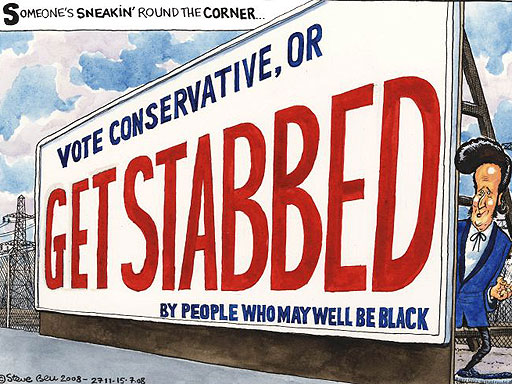
Drugs, knives and moral panics

The problems society faces with drugs and knives, and the solutions required, are dramatically different, but there are very marked similarities in the media and political discourse around both. Comparing the current moral panic about knife crime to the recent moral panic about cannabis in particular we can see much in common.


Both media panics erupted on the basis of individual tragedies, stories of young people developing mental illness in the case of cannabis, stories of young people dying after stab wounds for knives. In neither case was there actually a dramatic nation-wide culture shift that prompted the respective media frenzies; levels of cannabis use have been quite stable or falling for since 2002, and whilst knife crime has indeed been rising, it has been at a small but consistent rate over the same period, during which gun crime has experienced a comparable fall and violent crime overall is down (if notoriously problematic stats on drugs and crime are to be believed). Both examples have shown how statistics can be misunderstood or deliberately misrepresented to serve a particular given end, and for the tabloids that end is shock headlines that shift copy. They will ensure that there is something to panic about, whether it’s there or not. Last week’s four knife murders in 24 hours was portrayed almost as if it was the End of Days, but when you have around 70 knive murders a year it is inevitable there will be some clusters on a few days; unsurprising statistically but great for panic mongerers.

Sometimes it is difficult to understand what precipitates a media panic, although in the case of cannabis it was clearly centered around political opportunism from Government opponents exploiting the 2004 reclassification to accuse Blair/Brown of being soft on drugs/crime. ‘Soft on drugs’ is a charge that is far more powerful if the dangers of drugs are hyped with statistical shenanigans, and backed up with scary headlines (see above) and heart rending anecdotes of lost or wasted youth. It’s the old trick of stoking up fear and then politically exploiting the hell out of it. Old, but still brilliantly effective.

The knife panic, by contrast, seems to have been more tabloid driven, going into overdrive when one of the victims turned out to be the brother of a soap celebrity (who just happens to be a lad's mag ‘stunna’). Not that this has stopped mainstream politicians of all hues jumping on the bandwagon.


More depressing are the similarities in how politicians respond to endless series of media panics about Britain’s 'feral youth'. The usual response is the time honoured knee-jerk criminal justice crack-down backed with ubiquitous deployment of sound bites featuring the word ‘tough’. Inevitably the two main parties, in their attempts to placate the baying tabloids, then get into a bidding war over who can sound the toughest. The unfortunate but inevitable outcome is yet another ill-thought out, politically driven, reactive, short term, populist criminal justice response – or ‘crack down’. Just as inevitably this response will not be based on more enlightened current research or any evidence of effectiveness and will entirely fail to consider the wider social problems that underlie the symptomatic crises obsessed over by the headline writers. Alternatives to custody, restorative justice, investing in social capital, mental or wider public health based initiatives, addressing social exclusion, provision of recreational facilities for young people etc – all derided as ‘soft’ and weak responses. No, we obviously need to build more prisons.

Knife crime is a terrible problem (as I well know, being one of its victims) but it’s certainly nothing new. Yet the recent media frenzy has led to a raft of new initiatives being announced within an amazingly brief time period, in the last week almost on a daily basis. Meanwhile there is no media panic about, for example, spousal abuse and violence (which kills and injures far more than knives) and no significant policy responses being announced or even contemplated. The same could be said for any number of social problems that, for whatever reason (not sexy enough, gory enough, and/or don’t involve lad’s mag 'stunnas' or Amy Winehouse), don’t merit the attention of the newspaper editors.

Moral panics can be whipped up with quite astonishing speed, prompting the predictably stupid pro-forma government criminal justice led crack down / initiative, and then apparently disappearing from public view almost as quickly. Since its reclassification back to B cannabis has barely warranted a single mention in the media. The level of problems associated with its use amongst young people or the ‘cannabis factories’ run by evil foreign people have not diminished one bit, but there is just no political capital in it anymore, no conflict to get excited about, and the story has blown itself out. The media panic achieved its goal: It’s been re -classified now, everything is OK. Result!

"NEXT! "

And unless some more celebrity relations get stabbed, or an attractive white young female is the next victim, knives will be old news in a few weeks, and disappear just as the recent panics about guns, alcohol, hoodies, cannabis, and child abductions (etc) all have, to be replaced by something new, or recycled after a period of lying dormant (maybe satanic messages in heavy metal records are due a come back?)

If we are ever going to get real solutions to some of these seemingly intractable problems on the streets of Britain’s cities – and no one is denying they exist – what we need is for politicians to have the courage to defy the populist rantings of tabloids or political opponents and to deal with the complex social problems we face as policy scientists rather than pollsters. You are supposed to be our leaders; How about showing some leadership?

It might even help make people respect you again.


photo - thanks to Dean Morrison
cartoon - thanks to Steve Bell, the Guardian


UK Youth Strongest Supporters of Drug Legalisation in Europe


Transform Drug Policy Foundation (TDPF) today welcomed the European Commission’s (EC) decision to start using its regular Eurobarometer opinion poll “Young people and drugs” to assess public support for replacing drugs prohibition with state regulated supply.

Transform’s Policy Director Danny Kushlick said;

“We congratulate the EC for recognising that other options than the failed war on drugs are being proposed, and for asking the public about them. This poll shows that many people support new approaches, and it is likely many more at least want them properly explored.

In light of this, the UK Government must stop refusing to assess the costs and benefits of current and alternative ways to combat drug problems, allowing future policy to be based on evidence, not ‘tough on drugs’ posturing that costs lives and wrecks communities. Such an audit would show replacing drugs prohibition with strict control and regulation would cut crime, reduce harm to users, and save billions of pounds.”

Previous versions of the survey on attitudes to drugs amongst EU citizens aged 15-24 were carried out in 2002 and 2004. Only the most recent version in May 2008 asked:

· Whether legalising drugs would be one of the most effective ways for public authorities to combat drug problems.

· Whether heroin, cocaine, ecstasy or cannabis should continue to be banned, or their sale and consumption regulated instead.

The British, Irish and Dutch most favoured the legalisation and regulation of drugs as a way of dealing with drug related problems in society. In the UK and Ireland 22 per cent thought it would be either the most effective, or the second most effective way, followed by the Dutch on 21 per cent.

In the UK and Spain 40 per cent of young people thought the sale and consumption of cannabis should be regulated rather than banned, behind the Netherlands (52 per cent) and the Czech Republic (53 per cent).

Averaged across all 27 EU countries, those polled much preferred so-called “soft” measures for dealing with drug-users e.g. information and prevention campaigns (47 per cent) or the treatment and rehabilitation of users (33 per cent), as opposed to tough measures (23 per cent).

ENDS

Contact: Danny Kushlick, Head of Policy +44 (0) 7970 174747

Martin Powell +44 (0) 117 941 5810

Notes for Editors:

  1. For a full copy of Flash Eurobarometer No 233 –Young People and Drugs 2008 visit http://ec.europa.eu/public_opinion/flash/fl_233_en.pdf .
  2. The poll was requested by the European Commission’s Directorate-General Justice, Liberty and Security.
  3. In its review of UK drug policy of 2002 the UK Parliamentary Home Affairs Select Committee (including David Cameron MP) recommended: "That the Government initiates a discussion within the Commission on Narcotic Drugs of alternative ways - including the possibility of legalisation and regulation - to tackle the global drugs dilemma."
  4. Transform Drug Policy Foundation (TDPF) is the UK’s leading think tank on drug policy reform


Transform Drugs Policy Foundation
, Bristol BS5 0HE, Tel 0117 941 5810 www.tdpf.org.uk

Tuesday, July 08, 2008

Why crackdowns on drugs in prison completely miss the point

So another report on drugs in prisons, another outline of how bad the problem is, another list of how drugs get into prisons, and set of recommendations for a crackdown - based on, you guessed it, a new co-ordinated strategy, new technology and some new guidelines on best practice. As with previous reports on this issue, (and there have been a series of them going back decades, but all saying essentially the same thing) there is something missing here that renders this report just as pointless as all its predecessors. What's missing is the bigger picture. The courage to ask: why is there such an overwhelming demand for drugs in prison in the first place?


The new Blakey report, having described the five main routes by which drugs get into prisons acknowledges that 'If one route is disrupted or closed then more pressure will be placed on the other routes'. This analysis is central to the problems being faced but is not really explored by Blakey, beyond saying (one feels, without much conviction) that what is needed is a strategy that addresses all the routes in. By brushing past this he's missing the key point, essentially the same economic analysis that can be applied to the failure of prohibition and attempts to enforce supply controls nationally and globally, for which the failure at prison level provides a neat microcosm.

Where there is demand for drugs, but no licit supply, a potentially huge profit opportunity is created for criminal profiteers. The high risk environment of a prison inflates the market price of drugs within its walls (often by several hundred %) beyond their already inflated prices on the illicit market beyond them (for heroin and cocaine - by several several thousand % by the time they hit Britain's streets). So a gram that costs pennies to actually produce can sell for several hundred pounds inside a prison, and it is that sort of profit that encourages the kind of entrepreneurial cunning that can get literally tonnes of Class A drugs into high security prisons, year after year, crackdown after crackdown.

It would be hard to imagine how we could have engineered a worse scenario. Firstly we fill prisons with dependent drug users: 17% are inside for drug offences and more than half of the rest are problem users inside for offending related to their habits. A majority have mental health and emotional or psychological problems contributing to a (hardly surprising) demand for substances that can offer some temporary relief from the tedium, pain and misery of life in a cage. Indeed life inside can be so grim that many prisoners who arrive without a drug problem have developed one by the time they leave. The regular politician's refrain that prison is a good place for addressing drug problems is, in the vast majority of cases, offensively ridiculous (here's a test: present a series of treatment/recovery options to a group of treatment specialist for any given patient and see how many pick prison) . Not only is prison hugely more expensive than even residential rehab (it is actually more expensive than staying at the Ritz hotel), but its brutal reality is far more likely to be damaging and traumatic than healing and rehabilitative.

Into this population of often damaged chaotic dependent drug users we mix a significant number of violent criminal profiteers, most of whom are inside for drug dealing, and most of whom are well connected to the illegal drugs underworld. Who is really surprised at the outcome of this volatile cocktail? The demand for drugs in prison is so great and the profits so astronomical that a situation exists where economic pressures ensure a supply route will always be found. As Blakey says, shut down one avenue and the economic pressure starts to make exploring other ones worth while. At some point the opportunities created even start to entice some prison staff into the market - a point at which any vague hope of preventing drugs in the prisons is effectively lost, and a point long since past.

This is of course exactly the same phenomenon we see on the national and international stage with the hopeless futility of decades of drug eradication, interdiction, and populist nonsense about 'securing our borders' that bears a non-coincidental resemblance to the political rhetoric of the past 48 hours. We have long witnessed 'the balloon effect' that, for example, saw the 'crackdown' on cocaine production in Bolivia more than compensated for by a rise in Colombian production, or similarly how the 'crackdown' on Iranian smuggling routes for Afghan opium has pushed trafficking to new routes through the former Soviet republics to the North. Meanwhile, despite the billions hosed into supply side drug enforcement each year, the illicit trade thrives, drugs are more available and cheaper than ever and the violent gangsters selling them get richer and richer. Not only is the analysis of supply and demand in an unregulated illicit drug trade the same at prison, national and international level, so evidently are the responses: announce a big crackdown, unveil some new technology, produce a new strategy, create a new agency (or rename an old one), then announce your process successes to show you are 'doing something' whilst avoiding those pesky 'outcome' measures.... etc etc...Regardless of scale all such efforts that attempt to defy economic reality are equally futile.

So what is the answer? Firstly, politicians need to move beyond the denial stage of their addiction to punitive responses, to understand and respond to the problem's deeper structural causes, rather than merely deploying yet another doomed (even if sometimes well intentioned) attempt to deal with the symptoms. These causes of the problem lie at the heart of what is wrong with the UK drug policy;

  • The entire punitive culture and prevailing discourse that defaults to punishing, criminalising and imprisoning problem drug users rather than seeking primarily to promote their rehabilitation and wellbeing.
  • The populist political addiction to the use of prison more generally.
  • The symptomatic knee-jerk responses and the inability to engage with the problems that underly most problematic drug use; social and emotional deprivation, social exclusion and the failings of the education and welfare systems, failings of mental health services, failings of the care system, problems in the labour market for key populations, failure of social provision and the lack of investment in social capital for young people, and so on.
  • The prevailing system of absolute-prohibition that creates the illegal drug markets, the criminal entrepreneurs, and the financial pressures that drive dependent drug users into offending in the first place

Some responses advocated by Blakey and others may of course produce some improved outcomes on some measures; more investment in prison treatment is better than none at all for example - and if it can improve health and successfully reduce demand for drugs in prisons then that's a positive step. But such successes will be marginal, only be 'success' relative to the catastrophic failings of the past, and will essentially be reducing problems created by the wider failings of the prohibition-prison drug management model in the first place.

In the medium term we must completely move away from using prison as a sanction for non-violent drug (or drug-related) offenders of any kind, and develop and explore alternatives to custody that are consistently demonstrated to be not only cheaper but far more effective on key indicators - not least re-offending. We must help problem drug users rebuild their lives with appropriate tailored treatment and holistic support (including employment and housing support) rather than punishing and branding them with the stigma of a criminal record. The public have repeatedly been shown to support such cost effective responses and it is a mystery why politicians cannot embrace them and show leadership on this issue, rather than continuing to pander to a small nexus of vitriolic tabloid 'hang'm and flog'm' commentators.

In the longer term we need to have the long overdue review of the whole crumbling edifice of prohibition, its generational failure and its role in crime creation. Central to this is a meaningful exploration of regulatory alternatives to illicit drug markets, ones that are controlled by the state rather than by the mafia, and that sit within a broader policy framework predicated on public health and harm reduction principles, rather than knee-jerk punitive populism and medieval prisons.

Monday, July 07, 2008

Re-establishing the primacy of a public health / harm reduction approach


'After the War on Drugs, Tools for the Debate' part 10

Once the meaning of control and regulation is made clear, it becomes much easier to grasp that the response to illegal drugs need not be any different to our current response to legal drugs (see ‘fault-lines within existing policy’ ), or for that matter any other issue in the public health arena. Making the case for a public health-led response is crucial to getting the reform message across. It is a concept people are familiar with and understand (in relation to, for example, tobacco policy), and it helps direct the emphasis of the discourse towards evidence-based policy making and harm reduction – and away from the ideological dream of achieving a ‘drug free society’.


The fact that certain drugs are currently dealt with via the criminal justice system is a quirk of the history of prohibition, and not the conclusion of any kind of rational analysis or evaluation. Drugs, quite simply, are primarily a public heath issue and should be dealt with as such by the relevant public health agencies (see principles of drug policy).

Prohibition not only undermines public health efforts to reduce drug harms (by diverting budgets to enforcement and stigmatising the most vulnerable problem users with criminality) it actually increases harms associated with use by encouraging high risk behaviours (e.g. injecting/ sharing needles), it stifles access to accurate safety information, and ensures that dangerous drugs are of unknown strength and purity.

Public health interventions can be shown to be effective (e.g. needle exchanges, treatment programmes, controls on tobacco advertising), criminal justice interventions generally cannot.

Illegal drugs are unique in the public health arena in attempting to use criminal law as the primary method of educating the public. We have a whole range of alternative methods for public health education in schools, workplaces, public spaces, media and the home that can be shown to be more effective (and don’t involve making criminals out of a third of the country).

If the case for a public health-led response can be made effectively, it can only lead in one direction – away from irrational ideological commitments to prohibition and towards evidence based regulation and control. Once you have people thinking along these lines you are well on the way to winning them over.


part 1
part 2
part 3
part 4
part 5
part 6
part 7
part 8
part 9

Print copies are also available, please contact Transform


Saturday, July 05, 2008

The threat of the 'milk run'

The 'milk run' is a terrifying new youth phenomenon sweeping Australia which may soon reach Britain's shores. It involves Aussie High School kids having an end-of-year 'muck up' day: After drinking a litre of milk and some food colouring, they take a shot of lemon juice, then proceed to run, jump and shake themselves up until the coloured mixture curdles and comes back to greet the road, creating a sick homage to Jackson Pollock in psychedelic cottage cheese. The whole twisted ritual has been captured with secret cameras and posted on YouTube:


Alarmed policy makers have been left confused and impotent as the dangerous new youth cult involves no drugs for them to ban. Shorn of the more familiar media-friendly knee-jerk criminal justice response they have been mooting banning milk, lemon juice or food colouring - although the practicality of these is questioned by a few more rational voices, less swept up in the current milk-run panic. Personally I think we cannot gamble with the health of the next generation and so support the zero tolerance option. If we are to protect the UK's youth from the incoming yogurt tsunami we must immediately imprison all Aussie High school kids*.

*possibly on a remote island as far from the UK as possible