Showing posts with label Transform. Show all posts

Monday, October 18, 2010

Transform launches updated and re-designed 'Comparative Cost-Effectiveness of Drug Prohibition/Regulation' report


On the eve of the Comprehensive Spending Review it seems like an opportune moment to relaunch Transform's 2009 report: 'A Comparison of the Cost-Effectiveness of Prohibition and regulation of Drugs', now updated and beautifully redesigned (available online pdf). The publication created a decent media splash, led to a PQ and ultimately a meeting with the Prime Minister (see below for summary and details). 


Summary:
‘The benefits of… [legalisation/regulation] – such as taxation, quality control and a reduction in the pressures on the criminal justice system – are far outweighed by the costs and for this reason, it is one that this Government will not pursue either domestically or internationally.”
Home Office Briefing, 2008
  • Despite the billions spent each year on proactive and reactive drug law enforcement, the punitive prohibitionist approach has consistently delivered the opposite of its stated goals. The Government’s own data clearly demonstrates drug supply and availability increasing; use of drugs that cause the most harm increasing; health harms increasing; massive levels of crime created at all scales leading to a crisis in the criminal justice system; and illicit drug profits enriching criminals, fuelling conflict and destabilising producer and transit countries from Mexico to Afghanistan. This is an expensive policy that, in the words of the UN Office on Drugs and Crime, has also created a raft of 'negative unintended consequences’.

  • The UK Government specifically claims the benefits of any move away from prohibition towards legal regulation of drug markets would be outweighed by the costs. No such cost-benefit analysis, or even a proper Impact Assessment of existing enforcement policy and legislation has ever been carried out here or anywhere else in the world. Yet there are clear Government guidelines that an Impact Assessment should be triggered by amongst other things, a policy going out to public consultation or when ‘unintended consequences’ are identified, both of which have happened with drug policy in recent years.

  • Alternative approaches - involving established regulatory models of controlling drug production, supply and use - have not been considered or costed. The limited cost effectiveness analysis of current policy that has been undertaken has frequently been suppressed. In terms of scrutinizing major public policy and spending initiatives, current drug policy is unique in this regard.

  • The generalisations being used to defend continuation of an expensive and systematically failing policy of drugs prohibition, and close down a mature and rational exploration of alternative approaches, are demonstrably based on un-evidenced assumptions.

  • This paper is an attempt to begin to redress these failings by comparing the costs and benefits of the current policy of drug prohibition, with those of a proposed model for the legal regulation of drugs in the UK. We also identify areas of further research, and steps to ensure future drugs policy is genuinely based on evidence of what works.

  • This initial analysis demonstrates that a move to legally regulated drug supply would deliver substantial benefits to the Treasury and wider community, even in the highly unlikely event of a substantial increase in use.

A Selection of Media Coverage from the April 09 launch:

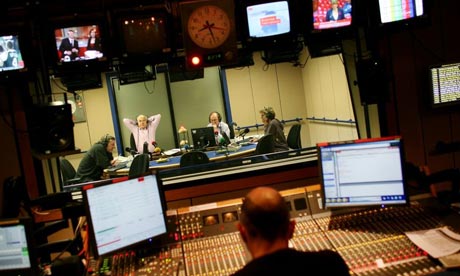
BBC radio 4: The Today Programme:


New Statesman: Limping Along on the Left

Daily Mail: Peter Hitchens: Eliot Ness couldn't stop booze, but he would win today's war on drugs ("Another parcel of garbage from the pro-drug lobby")


Further reading:


Wednesday, October 13, 2010

Transform's submission to the Drugs Strategy Consultation


The summary and conclusions are copied below, the full document (in Pdf format) is available here

Transform has a number of serious concerns about the consultation process and the contents of the consultation paper itself. These concerns are explored first with reference to the consultation document where relevant, and the Governments consultation code of practice. We then highlight and discuss key areas of policy that are absent from the consultation. 

On the specific questions in the consultation document not covered in this response Transform wishes to endorse the detailed submissions made by Release ( www.release.org ) and UKHRA / NNEF. (www.ukhra.org ) 

Summary: 

The consultation does not adhere to the first three criterion of the Government’s consultation code of practice regarding when to consult, duration of the consultation, or clarity and scope of impact.
There is no Impact Assessment for proposed policy changes, or research data / analysis presented in support of any proposals.
Key areas of the public policy debate are entirely absent from the consultation, specifically:
  • Harm reduction – a key pillar of UK drug policy receives no mention 
  • Sentencing / decriminalisation – the growing body of evidence, high level backing and active public debate are ignored
  •  Supply side enforcement – its efficacy is unquestioned (despite the absence of evidence) and its impacts unexplored
  • The classification system / ACMD – none of the high profile public debates and controversies on this important issue are addressed
  • International drug policy – there is no mention of or engagement with the international dimension of UK drug policy
  • Evaluative framework – there is no engagement with how policy should be evaluated – regards targets, KPIs and or how they should be prioritised
  • Tobacco – there are many mentions of alcohol, but none of the drug associated with the greatest number of addictions and chronic deaths in the UK
 
Discussion / Conclusions 

There are some positive things in this consultation. We are pleased to see the call for ‘a more holistic approach with drugs issues being assessed and tackled alongside other issues such as alcohol abuse, child protection, mental health, employment and housing’.

Transform have long argued that levels of problematic drug use primarily reflect a complex interplay social, economic and cultural variables. In addition to those above we would certainly include social deprivation, inequality and broader measures of personal and social wellbeing. The corollary of this, of course, is that the impact of drug policy as traditionally conceived (prevention, treatment, and enforcement) should not be overestimated and may be marginal, in many cases irrelevant, relative to the underlying social determinants of drug using behaviours.

This analysis – that problematic use is essentially a barometer of a social wellbeing (or lack of) - has obvious implications for longer term prevention and harm reduction strategies. It suggests that success is likely to flow more from investment in social capital and addressing multiple deprivation and inequality issues, particularly as they affect young people, rather than from pouring ever more money into more conventional interventions that are poorly supported by evidence. 

Whilst conventional drug policy may only be able to achieve, at best, fairly marginal impacts on prevalence of problematic use, the overarching prohibitionist legal framework can, however, have a dramatic impact on levels of harm associated with drug use. This can be both by increasing health risks associated with use, and through the wider social harms created or exacerbated by the illegal drug market. 

This goes to the heart of the drug policy and law reform position that Transform represents; a pragmatic position that accepts both the reality of demand for drugs as it currently exists, and that this demand will be met by illegal supply routes if no legally regulated supply option exists. Drug markets can be controlled and regulated by governments or by gangsters; there is no third option that involves a drug free society. 

We argue that legally regulating drug production, supply and use (as detailed in ‘After the War on Drugs; Blueprint for Regulation’) would deliver better outcomes than the anarchic criminal free for all and underground drug culture we currently have. The pragmatic mindset also requires that whilst we acknowledge  most people do not use illegal drugs, we must also acknowledge that most of those who do, do so relatively responsibly. Their use is not associated with significant personal or social harms, and as such should not be deemed problematic. Of people (globally) who report using illegal drugs in the last year The UNODC only describes 5% as problematic users. It is important to be mindful of the 95% of non-problematic users who do not need treatment – let alone criminal sanction.

Whilst there is a welcome and growing acknowledgement that treatment, prevention and education should be are tailored to individual and local needs - prohibition remains a blunt, inflexible and indiscriminate legislative tool, an absolutist position that criminalises all users regardless of their impact on themselves or those around them, similarly forcing all supply in the hands of criminal profiteers.

The reform position has its roots in the critique of the failings of this approach – both on its own terms, and regards the secondary unintended harms of the illegal trade it fuels. As has been alluded to in this response, the prohibitionist paradigm cannot stand scrutiny, which is at least part of the reason why scrutiny has been so studiously avoided for so long. Indeed the ‘war on drugs’ has required a monumental propaganda effort to sustain it – just as many other wars have.

We only need cast our minds back to the farcical drug strategy consultation of 2007. It was supported by a consultation document described by the ACMD thus:
"it is unfortunate that the consultation paper’s ‘key facts and evidence’ section appears to focus on trying to convince the reader of success and progress; rather than providing an objective review and presentation of the current evidence. The ACMD found the consultation paper self-congratulatory and generally disappointing.’

‘It is of concern that the evidence presented, and the interpretation given, are not based on rigorous scrutiny.'
Of the same document the Government’s own Statistics Commission similarly accused the Home Office of spinning the data to make it look more favourable and failing to ‘provide a balanced presentation of the relevant statistical and other evidence’. 
 
Meanwhile a rigorous and critical ‘value for money’ study (referred to on page 10) that informed the Home Office’s internal review was not made publicly available – only emerging this year following an absurdly protracted 3-year FOI battle with Transform. 

Many the problems with that ill fated consultation (regards process, content and transparency) have unfortunately now been repeated, although this time around we do not even have crudely spun evidence to criticise – there is simply none.
 
This is why the core of our call in this response is to return to the evidence; to have, if you will forgive the oft-misused political clichés, a ‘mature and rational debate’ about ‘what works’.

But this time with all options on the table.
 
This requires open, honest and ongoing evaluation, and as a starting point; independently overseen Impact Assessments of all policies and legislation, new and old (including the MDA 1971). 

In terms of the general mindset, this will entail a move from misplaced moralising and outdated (but entrenched) drug war ideologies to pragmatic public health and social policy norms. If the Government follow the evidence it can only lead to better policies and the better outcomes we all seek. We are confident that if this happens it will only lead in one direction – and it will not be towards criminalisation and prohibition. 

Sadly this consultation falls short on almost every front – it is tokenistic, politicised, and entirely inadequate for the reasons outlined. It is more than a missed opportunity; it is entirely unacceptable as a basis for developing a new drug strategy. We therefore recommend that it be reviewed by the Cabinet Office (and will be requesting this from the Cabinet Minister) with a view to being re-launched. The new consultation process should address the identified shortcomings by adhering to the Government code of practice, including evidential support and Impact Assessments for all proposals, and covering all aspects of UK drug policy of concern to stakeholders.

Wednesday, October 06, 2010

Transform invited to address New York Bar Association in November


 The New York City Bar Association's Committee on Drugs and the Law presents

CONFRONTING AN OXYMORON: TAKING CONTROL OF CONTROLLED SUBSTANCES

November 16, 2010, 5:30 p.m
 42 West 44th Street, New York NY

The Federal Controlled Substances Act of 1970 defines U.S. drug control. For forty years it has affected crime, public health, and the justice system, with little success: the societal harm relating to drugs continues to escalate.

On this fortieth anniversary of the Controlled Substances Act, the Committee on Drugs and the Law will present an international group of experts to address key questions:
  • What can health and law enforcement officials do differently to control the supply of and demand for psychoactive substances?

  • What economic, regulatory, and social tools to control the drug markets are we not using?

  • Which currently regulated markets for potentially harmful substances or products might be adapted to control the sale and use of illicit drugs?

  • Which controls best protect young people?

Speakers

  • Roger Goodman, J.D., Vice Chair, House Judiciary Committee, Washington State Legislature, Kirkland, WA.
    Topic: Current legislative struggles to reform drug regulation at the state level: legal, practical and ideological obstacles.
  • Mark Haden, M.S.W., Addiction Clinical Supervisor, Vancouver Coastal Health Authority, Vancouver, B.C., Canada.
    Topic: Options for regulation of drugs based on public health and human rights.
  • Nathan Riley, Legislative Assistant, N.Y. State Senator Joseph Galiber (1990-1993), New York, NY.
    Topic: An early attempt to create a regulated market for drugs in New York State and public health crises as the primary impetus for drug law reform to date.
  • Stephen Rolles, Senior Policy Analyst, Transform Drug Policy Foundation, author of “After the War on Drugs: Blueprint for Regulation,” Bristol, England.
    Topic: Existing models around the world for regulating products such as caffeine, tobacco, alcohol, pharmaceuticals, as well as prohibited psychoactive substances.
  • Marc Sorini, Esq., Head of the Alcohol Regulatory and Distribution Group, McDermott Will & Emery, Washington, D.C.
    Topic: The legal mechanism of alcohol regulation. (This presentation will focus exclusively on alcohol control and will take no position regarding drug law.)
  • Eric E. Sterling, President, Criminal Justice Policy Foundation, Assistant Counsel, U.S. House Judiciary Committee (1979-1989), Silver Spring, MD.
    Topic: History of federal drug laws from 1914, focusing on the Controlled Substances Act and Reagan-era criminal statutes.

    Tuesday, July 20, 2010

    Transform at AIDS 2010 in Vienna: photo blog - day 1


    Transform and IDPC are co-hosting the Drug Policy Networking zone in the Global Village space at the huge AIDS 2010 conference in Vienna (see this previous blog for more details). With over 20,000 delegates it is the biggest health conference in the world. Below are a few images from the first two days. More detailed reports from the conference will follow during the week...


    Setting up the drug policy networking zone in the Global village
    on Sunday


    over a 1000 kgs of materials arrived safely from around the world


    Setting up the literature table


    The completed zone


    Opening recenption for human rights Harm reduction and drug policy zone


    Protest against failure of governments to meet AIDS funding commmittments


    Chinese protesters


    Clinton addresses the conference plenary session
    "We know harm reduction works"


    the vast plenary session venue (looking back from the half way point)


    Ethan Nadlemann from the Drug Policy Alliance speaking at the first session


    Ethan Nadlemann from DPA, Ann Forham from IDPC, and Niahm Eastwood from Release


    Two of our Global Village volunteers

    Friday, July 16, 2010

    Transform in the British Medical Journal: 'An Alternative to the War on Drugs'


    The British Medical Journal this week publishes a special edition on drug titled: 'Drug users and HIV: treat don't punish'. the cover feature includes a special commentary section on drugs, HIV/AIDS and harm reduction to coincide with the huge AIDS 2010 conference in Vienna that kicks off this Sunday (see this blog for details and Transform's involvement in the Global Village's Drug Policy Networking Zone).


    The special edition of the BMJ features five commissioned commentaries, including; 'Alternatives to the war on drugs' by Transform's Steve Rolles, one of the first detailed explorations in a mainsteam medical journal of legal regulatory models as alternatives to existing unregulated criminal drug markets, specifically from a public health perspective. The full text (also available on the BMJ site here, with rapid responses here) is copied below as it appears online.
    The issue also includes Professor Tim Rhodes, Anya Sarang, Peter Vickerman, and Professor Matthew Hickman, on ‘Policy resistance to harm reduction for drug users and potential effect of change’; Richard Hurley on ‘How Ukraine is tackling Europe’s worst HIV epidemic and an editorial on ‘Evidence based policy for illicit drugs’ by Prof Evan Wood (who was on BBC R4's Today program this Friday discussing these issues and talking about the Vienna Declaration). These are all now available in full online.

    In a significant endorsement, the editor of the BMJ Fiona Godlee, in an editorial titled 'Ideology in the ascendant' , concludes by noting that:
    "In a beautifully argued essay Stephen Rolles calls on us to envisage an alternative to the hopelessly failed war on drugs. He says, and I agree, that we must regulate drug use, not criminalise it."
    Also of note is that two other leading journals, the Lancet and Science, are running special editions on drugs and harm reduction this week. The Lancet is due to lead with the publication of the Vienna Declaration calling for science based drug policy and the decriminalisation of drug use. It is the declaration being adopted by the AIDS 2010 conference and supported by a growing list of public figures from political and scientific establishments.

    The BMJ has also produced this excellent short film (below) by Martin Freeth, titled 'HIV shoots up', to go with its special edition. It features Alex Stevens, Tim Rhodes, Gerry Stimson, Steve Rolles and Elzabeth Pisani.


    Published 13 July 2010, doi:10.1136/bmj.c3360
    Cite this as:
    BMJ 2010;341:c3360

    Analysis

    An alternative to the war on drugs


    Stephen Rolles, senior policy analyst
    1 Transform Drug Policy Foundation, Bristol BS5 0HE
    steve@tdpf.org.uk
    Stephen Rolles argues that we need to end the criminalisation of drugs and instead set up regulatory models that will control drug markets and reduce the health and social harms caused by current policy

    Consensus is growing within the drugs field and beyond that the prohibition on production, supply, and use of certain drugs has not only failed to deliver its intended goals but has been counterproductive. Evidence is mounting that this policy has not only exacerbated many public health problems, such as adulterated drugs1 and the spread of HIV and hepatitis B and C infection among injecting drug users, but has created a much larger set of secondary harms associated with the criminal market. These now include vast networks of organised crime, endemic violence related to the drug market,2 corruption of law enforcement and governments, militarised crop eradication programmes (environmental damage, food insecurity, and human displacement), and funding for terrorism and insurgency.3 4

    These conclusions have been reached by a succession of committees and reports including, in the United Kingdom alone, the Police Foundation,5 the Home Affairs Select Committee,6 The prime minister’s Strategy Unit,7 the Royal Society of Arts,8 and the UK Drug Policy Consortium.9 The United Nations Office of Drugs and Crime has also acknowledged the many "unintended negative consequences" of drug enforcement,10 increasingly shifting its public rhetoric away from its former aspirational goals of a "drug free world," towards "containment" of the problem at current levels.

    Problems of prohibition

    Despite this emerging consensus on the nature of the problem, the debate about how policy can evolve to respond to it remains driven more by populist politics and tabloid headlines than by rational analysis or public health principles.


    The criminalisation of drugs has, historically, been presented as an emergency response to an imminent threat rather than an evidence based health or social policy intervention.11 Prohibitionist rhetoric frames drugs as menacing not just to health but also to our children, national security, and the moral fabric of society itself. The prohibition model is positioned as a response to such threats,12 13 and is often misappropriated into populist political narratives such as "crackdowns" on crime, immigration, and, more recently, the war on terror.


    This conceptualisation has resulted in the punitive enforcement of drug policy becoming largely immune from meaningful scrutiny.14 A curiously self justifying logic now prevails in which the harms of prohibition—such as drug related organised crime and deaths from contaminated heroin—are conflated with the harms of drug use. These policy related harms then bolster the apparent menace of drugs and justify the continuation, or intensification, of prohibition. This has helped create a high level policy environment that routinely ignores or actively suppresses critical scientific engagement and is uniquely divorced from most public health and social policy norms, such as evaluation of interventions using established indicators of health and wellbeing.

    Emerging change

    Despite this hostile ideological environment, two distinct policy trends have emerged in recent decades: harm reduction15 and decriminalisation of personal possession and use. Although both are nominally permitted within existing international legal frameworks, they pose serious practical and intellectual challenges to the overarching status quo. Both have been driven by pragmatic necessity: harm reduction emerging in the mid-1980s in response to the epidemic of HIV among injecting drug users, and decriminalisation in response to resource pressures on overburdened criminal justice systems (and, to a lesser extent, concerns over the rights of users). Both policies have proved their effectiveness. Harm reduction is now used in policy or practice in 93 countries,16 and several countries in mainland Europe,17 18 and central and Latin America have decriminalised all drugs, with others, including states in Australia and the United States, decriminalising cannabis.19


    Decriminalisation has shown that less punitive approaches do not necessarily lead to increased use. In Portugal, for example, use among school age young people has fallen since all drugs were decriminalised in 2001.20 More broadly, an extensive World Health Organization study concluded: "Globally, drug use is not distributed evenly and is not simply related to drug policy, since countries with stringent user-level illegal drug policies did not have lower levels of use than countries with liberal ones."21

    Similarly US states that have decriminalised cannabis do not have higher levels of use than those without. More importantly, the Netherlands, where cannabis is available from licensed premises, does not have significantly different levels of use from its prohibitionist neighbours.19

    New approach

    Although these emerging policy trends are important, they can be seen primarily as symptomatic responses to mitigate the harms created by the prohibitionist policy environment. Neither directly tackles the public health or wider social harms created or exacerbated by the illegal production and supply of drugs.


    The logic of both, however, ultimately leads us to confront the inevitable choice: non-medical drug markets can remain in the hands of unregulated criminal profiteers or they can be controlled and regulated by appropriate government authorities. There is no third option under which drugs do not exist. The choice needs to be based on an evaluation of which option will deliver the best outcomes in terms of minimising the harms, both domestic and international, associated with drug production, supply, and use. This does not preclude reducing demand as a legitimate long term policy goal, rather it accepts that policy must also deal with the reality of current high levels of demand.


    A historical stumbling block in this debate has been that the eloquent and detailed critiques of the drug war have not been matched by a vision for its replacement. Unless a credible public health led model of drug market regulation is proposed, myths and misrepresentations will inevitably fill the void. So what would such a model look like?


    Transform’s blueprint for regulation22 attempts to answer this question by offering different options for controls over products (dose, preparation, price, and packaging), vendors (licensing, vetting and training requirements, marketing and promotions), outlets (location, outlet density, appearance), who has access (age controls, licensed buyers, club membership schemes), and where and when drugs can be consumed. It then explores options for different drugs in different populations and suggests the regulatory models that may deliver the best outcomes (box). Lessons are drawn from successes and failings with alcohol and tobacco regulation in the UK and beyond, as well as controls over medicinal drugs and other risky products and activities that are regulated by government.


    Five basic models for regulating drug availability22
    • Medical prescription model or supervised venues—For highest risk drugs (injected drugs including heroin and more potent stimulants such as methamphetamine) and problematic users
    • Specialist pharmacist retail model—combined with named/licensed user access and rationing of volume of sales for moderate risk drugs such as amphetamine, powder cocaine, and methylenedioxymethamphetamine (ecstasy)
    • Licensed retailing—including tiers of regulation appropriate to product risk and local needs. Used for lower risk drugs and preparations such as lower strength stimulant based drinks
    • Licensed premises for sale and consumption—similar to licensed alcohol venues and Dutch cannabis "coffee shops," potentially also for smoking opium or poppy tea
    • Unlicensed sales—minimal regulation for the least risky products, such as caffeine drinks and coca tea.


    Such a risk guided regulatory approach is the norm for almost all other arenas of public policy, and in this respect it is prohibition, not regulation, that can be viewed as the anomalous and radical policy option.


    Moves towards legal regulation of drug markets depend on negotiating the substantial institutional and political obstacles presented by the international drug control system (the UN drug conventions). They would also need to be phased in cautiously over several years, with close evaluation and monitoring of effects and any unintended negative consequences.

    Rather than a universal model, a flexible range of regulatory tools would be available with the more restrictive controls used for more risky products and less restrictive controls for lower risk products. Such differential application of regulatory controls could additionally help create a risk-availability gradient. This holds the potential to not only reduce harms associated with illicit supply and current patterns of consumption but, in the longer term, to progressively encourage use of safer products, behaviours, and environments. Understanding of such processes is emerging from "route transition" interventions aimed at encouraging injecting users to move to lower risk non-injecting modes of administration by, for example, providing foil for smoking.23 This process is the opposite of what has happened under prohibition, where a profit driven dynamic has tended to tilt the market towards ever more potent (but profitable) drugs and drug preparations, as well as encouraging riskier behaviours in high risk environments.


    The oversight and enforcement of new regulations would largely fall within the remit of existing public health, regulatory, and enforcement agencies. Activities that take place outside the regulatory framework would naturally remain prohibited and subject to civil or criminal sanctions.


    Regulation is no silver bullet. In the short term it can only seek to reduce the problems that stem from prohibition and the illicit trade it has created. It cannot tackle the underlying drivers of problematic drug use such as inequality and social deprivation. But by promoting a more pragmatic public health model and freeing up resources for evidence based social policy and public health based interventions it would create a more conducive environment for doing so. The costs of developing and implementing a new regulatory infrastructure would represent only a fraction of the ever increasing resources currently directed into efforts to control supply. There would also be potential for translating a proportion of existing criminal profits into legitimate tax revenue.


    Different social environments will require different approaches in response to the specific challenges they face. Transform’s blueprint does not seek to provide all the answers but to move the debate beyond whether we should end the war on drugs to what the world could look like after the war on drugs. It is a debate that the medical and public health sectors have failed to engage with for far too long.


    Cite this as: BMJ 2010;341:c3360


    Contributors and sources: SR is the author of After the War on Drugs: Blueprint for Regulation. The book is published by Transform Drug Policy Foundation, which actively campaigns for drug policy and law reform, and is available free online (www.tdpf.org.uk/Transform_Drugs_Blueprint.pdf).


    Competing interests: The author has completed the unified competing interest form at www.icmje.org/coi_disclosure.pdf (available on request from him) and declares (1) the writing and production of SR’s book, including a contribution to his salary, were funded by the J Paul Getty Jr Charitable Trust and the Glass House Trust; (2) no financial relationships with commercial entities that might have an interest in the submitted work; (3) no spouses, partners, or children with relationships with commercial entities that might have an interest in the submitted work; and (4) no non-financial interests that may be relevant to the submitted work.
    Provenance and peer review: Commissioned; externally peer reviewed.

    References


    1. Cole C, Jones L, McVeigh J, Kicman A, Qutub Syed Q, Bellis M. A guide to the adulterants, bulking agents and other contaminants found in illicit drugs. Centre for Public Health, John Moores University, 2010.
    2. Werb D, Rowell G, Kerr T, Guyatt G, Montaner J, Wood E. Effect of drug law enforcement on drug-related violence: evidence from a scientific review. International Centre for Science in Drug Policy, 2010.
    3. Felbab-Brown V. Shooting up: counter-insurgency and the war on drugs. Brookings Institution Press, 2009.
    4. Barrett D, Lines L, Schleifer R, Elliot R, Bewley-Taylor D. Recalibrating the regime. Beckley Foundation. International Harm Reduction Association, 2008.
    5. Police Foundation. Drugs and the law: report of the independent inquiry into the Misuse of Drugs Act 1971. Police Foundation, 1999.
    6. Home Affairs Select Committee. The government’s drugs policy: is it working? Stationery Office, 2002.
    7. Prime Minister’s Strategy Unit. Strategy Unit drugs report. 2003. www.cabinetoffice.gov.uk/media/cabinetoffice/strategy/assets/drugs_report.pdf..
    8. Royal Society of Arts Commission on Illegal Drugs, Communities and Public Policy. Drugs—facing facts. RSA, 2007.
    9. Reuter P, Stevens A. An analysis of UK drug policy. UK Drug Policy Commission, 2007.
    10. Costa A. Making drug control "fit for purpose": Building on the UNGASS decade. UN Office on Drugs and Crime, 2008.
    11. Barrett D. Security, development and human rights: Normative, legal and policy challenges for the international drug control system. Int J Drug Policy 2010;21:140-4.[CrossRef][Web of Science][Medline]
    12. United Nations. United Nations convention against illicit traffic in narcotic drugs and psychotropic substances. 1988. www.unodc.org/pdf/convention_1988_en.pdf.
    13. Brown G. Prime minister’s questions. Hansard 2010 Mar 24. www.publications.parliament.uk/pa/cm200910/cmhansrd/cm100324/debtext/100324-0003.htm#10032434000735.
    14. Committee on Data and Research for Policy on Illegal Drugs. Informing America’s policy on illegal drugs: what we don’t know keeps hurting us. National Research Council, National Academy Press, 2001.
    15. International Harm Reduction Association. What is harm reduction? A position statement. 2010. www.ihra.net/Whatisharmreduction.
    16. Cook C, ed. The global state of harm reduction 2010: key issues for broadening the response. www.ihra.net/Assets/2522/1/GlobalState2010_Web.pdf.
    17. European Monitoring Centre for Drugs and Drug Addiction. Illicit drug use in the EU: legislative approaches. EU, 2005.
    18. Blickman T, Jelsma M. Drug policy reform in practice. Transnational Institute, 2009.
    19. Room R, Hall W, Reuter P, Fischer B, Lenton S. Global cannabis commission report. Beckley Foundation, 2009.
    20. Hughes C, Stevens A . What can we learn from the Portuguese decriminalisation of illicit drugs?. Br J Criminology (forthcoming).
    21. Degenhard L, Chiu W-T, Sampson N, Kessler RC, Anthony JC, Angermeyer M, et al. Toward a global view of alcohol, tobacco, cannabis, and cocaine use: findings from the WHO World Mental Health Surveys. PLoS Med 2008;5:e141.[CrossRef][Medline]
    22. Rolles S. After the war on drugs: blueprint for regulation. Transform Drug Policy Foundation, 2009. www.tdpf.org.uk/Transform_Drugs_Blueprint.pdf.
    23. Bridge J. Route transition interventions: Potential public health gains from reducing or preventing injecting. Int J Drug Policy 2010;21:125-8.[CrossRef][Web of Science][Medline]
    (Accepted 3 June 2010)

    Monday, July 12, 2010

    The Drug Policy Networking Zone at the AIDS 2010 conference in Vienna


    IAS AIDS conference 2010 in Vienna:
    Drug Policy Networking Zone in the Global Village

    Transform Drug Policy Foundation and the International Drug Policy Consortium are co-orgainising and hosting the Drug Policy Networking Zone at the XVIII International AIDS Conference in Vienna, Austria, from 17 to 23 July 2010. You can download the networking zone flyer and event schedule here(pdf).

    About XVIII International HIV/AIDS Conference (AIDS 2010)


    The International AIDS Conference is the worlds premier gathering for those working in the field of HIV, policy makers, persons living with HIV and other individuals committed to ending the pandemic. There will be over 25,000 delegates at the main conference, and the Global Village is additionally open to the public.

    It is now clear that stigma, discrimination and human rights violations, as well as punitive or misguided policies towards key populations most affected by HIV, are major obstacles to an effective response to HIV.

    Given the 2010 deadline for universal access set by world leaders, AIDS 2010 will coincide with a major push for expanded access to HIV prevention, treatment, care and support. With a global economic crisis threatening to undermine public investments, the conference will help keep HIV on the front burner, and will be a chance to demonstrate the importance of continued HIV investments to broader health and development goals. In this context, the protection of human rights is a fundamental prerequisite to an effective response to HIV.

    This year's conference has a special focus on drug policy reform with the launch and pormotion of the Vienna Declaration being one its primary aims.

    The Drug Policy Networking Zone

    The Drug Policy Networking Zone, located in the Global Village, is a space for sharing ideas, experiences and expertise on drug policy reform. It is also a place to forge new links and develop strategic thinking. We’ve joined forces with the Harm Reduction and Human Rights Networking Zones to produce a ‘mega’ zone with a full schedule of talks, discussions, debates and multimedia running throughout the week. Click here to find out more about the full programme of events that will be taking place in the ‘mega’ zone.


    Opening Reception

    There is an opening reception of the Drug Policy, Harm Reduction and Human Rights networking zones on Sunday 18th July, 16:00-18:00. All welcome.

    Press briefing

    We will be holding a press briefing in the Drug Policy Networking Zone from 15:30-16:00 on Sunday 18th July.

    Highlights from the Drug Policy Networking zone event shedule include:

    • What can the drug policy reform movement learn from HIV/AIDS activism?
    Tuesday 20 July, 16:00-16:45
    Civil society actors within the HIV movement have a much stronger presence and a louder voice within drug policy debates than civil society within drug policy reform. This session aims to discuss and debate the essential features of AIDS activism that could inform drug policy activism.
    • ”Beyond a declaration”, how can we continue to move towards drug policy reform?
    Wednesday 21 July, 14:15-15:15
    The Vienna Declaration is a global call for science-based drug policy and is the official declaration of AIDS 2010. The session will feature one of the declaration’s key authors, Evan Wood, from the International Centre for Science in Drug Policy, Steve Rolles from Transform and Kasia Malinowska-Sempruch from OSI.
    • Drug policy and law reform: progress and challenges for the future
    Wednesday 21 July, 12:00-13:00 and Thursday 22 July, 16:30-17:30
    Policies that act as a barrier to drugs services can increase the health risk for injecting drug users putting them at greater exposure to blood-borne infections, including HIV. The panel will look at how lobbying, campaigning and legal challenges against such policies and interventions can lead to law reforms that ultimately provide greater protection to IDUs and enable them to access drug treatment and harm reduction services without fear of being punished.

    Volunteering

    We welcome volunteers to help us with the organisation and staffing of our zone in the Global Village.  Please contact Marie at mnougier@idpc.net if interested.


    For those attending - we look forward to seeing you in Vienna! For those not attending the conference you can follow the weeks activities on the blog and twitter.


    Tuesday, March 09, 2010

    Transform at CND in Vienna

    As Steve Rolles heads off for California, I am at the UN's annual Commission on Narcotic Drugs meeting in Vienna for which Transform has ECOSOC special consultative status.

    UN buildings in Vienna*

    We are here as more than just spectators. In addition to attending a range of meetings that I will report on over the next few days, we have co-organised our own event, as part of the rapidly growing campaign for an Impact Assessment of drug policy, with our colleagues at the International Drug Policy Consortium. We are particularly pleased Carel Edwards the Head of the EC's Anti-Drugs Policy Unit has agreed to speak, as well as the Chair of IDPC Mike Trace, and myself (details below).

    I would also recommend checking out the live CNDblog run by IHRA and IDPC which will provide regular  independent updates and reporting throughoutthe CND. IHRAs HR2 blog will also be reporting daily (report on Day 1 is already up)

    CND 2010 side event -Time for an Impact Assessment of Drug Policy

    10 Mar 2010
    Vienna, Austria

    All stakeholders in the drugs debate share the goal of a policy and legal structures that maximise social, environmental, physical and psychological wellbeing. Particularly at a time of economic stricture, it is also crucial that drug policy expenditures are cost-effective. Yet despite the many billions of dollars in drug-related spending each year, there are great concerns about the outcomes of the current approach, at the domestic and international level.

    However, the debate around improving drug policy has been emotive, polarised and deadlocked. Proponents of different views of the best way forward tend to focus on the arguments and evidence that support their perspective. In this context, national governments and international agencies need to take a structured approach to assessing the best mix of evidence-based drug policies to promote human development, human security and human rights. Impact Assessment methodologies provide a potential mechanism for conducting an independent, neutral analysis that all stakeholders can support. These methodologies have been used to great effect in other policy areas, comparing the economic, environmental and social costs and benefits of existing policies against a full range of alternatives. For an Impact Assessment of drug policy, these alternatives should include more intensive/punitive enforcement approaches, as well as options for decriminalisation of personal use, and models for legal regulation of drug production and supply.
    This introductory event on Impact Assessment will consist of short presentations and a Question and Answer session covering:
    • How Impact Assessments can help;
    • How Impact Assessments might be commissioned and structured, both nationally and internationally;
    • Opportunities and Barriers; and
    • Impact Assessment of drug policy and the EU.
    Speakers:
    • Carel Edwards, Head of the EC Anti-Drugs Policy Unit, DG JLS
    • Mike Trace, Chair of IDPC
    • Martin Powell, Campaigns Manager, Transform Drug Policy Foundation.
    * pic: Steve Rolles 2008

    Monday, March 08, 2010

    Transform goes to California

    Steve from Transform is speaking at the Students for Sensible Drug Policy (SSDP) conference in San Francisco this Saturday, presenting Transforms latest publication 'After the War on Drugs; Blueprint for Regulation', at a panel discussion titled 'should we legalize all drugs'. The full SSDP conference program is available here (pdf).


    Immediately following the SSDP event Steve is attending the 2-day RAND International Society for Study of Drug Policy 4th annual conference in Santa Monica, where he is chairing a panel discussion on 'Prevention and other community approaches to drug policy'. 

    Tuesday, January 12, 2010

    Gordon Brown responds to Transform's call for Impact Assessment

    I received a letter from Downing Street this week, in response to my meeting with Prime Minister Gordon Brown to call for an Impact Assessment of the Misuse of Drugs Act. In July of last year I met with the PM to ask the Government to compare and contrast the impacts of the current prohibitionist legislation with alternatives, including legal regulation and control. Here is the briefing that I gave him.

    His response is in full below. It includes the following:

    "We do not intend to undertake an impact assessment comparing the costs and benefits of different legislative options for domestic drug policy. We see no merit in embarking upon such an undertaking in view of our longstanding position that we do not accept that legalisation and regulation are now, or will be in the future, an acceptable response to the presence of drugs."

    So let me get this straight, the Government will not review the evidence of efficacy of the current policy or compare it with alternatives because it is committed to the current regime and, without exploring the outcomes of the Misuse of Drugs Act or prohibition, has decided that alternatives are "not acceptable". So far, so bad. Let's not let evidence get in the way of an effective drug policy (witness the sacking of David Nutt). Meanwhile our tax pounds will be spent on prohibition, without checking whether the policy is of any use, or heaven forfend, totally counterproductive...

    I am also not overly reassured by:

    "We are working to ensure that UN drugs activity is based on evidence and effectiveness..."

    Do not forget that the head of the UN Office on Drugs and Crime has identified the Drug Control System as the cause of much of the 'drug problem'.

    But there's more - the absolutist position - that regulation will not be acceptable now "...or in the future..." Yes folks, that means for ever!

    ...and is a statement that is completely undermined by the fact that legal regulation is the Government's chosen option for alcohol, tobacco, caffeine etc etc

    It also suggests:

    "The methodological challenges involved in attempting to calculate the scale of the drugs market (supply and demand) and the costs of its harms are very significant."

    Oh, so it's too hard is it? I can think of many experts from all round the world who would be delighted to assist in this task. At any rate, this "challenge" is created by gifting the market to unregulated dealers in the first place.

    With David Cameron back pedalling on his previously held position (when he sat as a backbencher on the Home Affairs Select Committee in 2001/2), that the UK should initiate a debate at the UN on alternatives to prohibition, the outcome of the upcoming general election is unlikely to herald early reform in the right direction.

    Should you wish to ask your MP or parliamentary candidate if they support an Impact Assessment, feel free to use our briefing or contact us for advice.

    Transform will be bringing you more on drug policy election shenanigans over the next few months.

    (Click on the images to enlarge the letter and view it full screen)


    Thursday, January 07, 2010

    New HCLU short film about Transform's Blueprint

    Thanks to Peter Sarosi from HCLU for producing this short film featuring Transform's new publication 'After the War on Drugs: Blueprint for Regulation', filmed at the recent DPA conference in Albuquerque.


    Friday, December 04, 2009

    Transform submission to the Home Office review of the ACMD

    Transform have prepared a response to the Home Office review of the ACMD available in pdf here*. The introduction is copied below.


    Introductory Comments

    Transform is supportive of the concept of an independent expert Government advisory body on drugs and drug policy. In such a highly emotive and politicised policy area as drugs, the existence and independent functioning of such an entity becomes all the more critical; able to objectively review and speak to the evidence and make pragmatic recommendations on key questions based on science and rational analysis, rather than politics or ideology.

    Whilst Transform have been impressed by the consistent level of expertise, thoroughness and rigor of the ACMD’s outputs, we have also been critical of them on a number of fronts, both analytical and procedural. Some of these criticisms are outlined – with proposed solutions – in this submission.

    However, it has become clear that the ability of the Council to function properly is critically, undermined by the nature of its constitution within the Misuse of Drugs Act (MDA), and its corresponding operation within the ambit of the Home Office. The discussion and proposals made in response to the questions posed by this review can hopefully offer some short term improvements, but are essentially band-aids for the wider malfunctioning of a system in urgent need of root and branch reform.

    We have touched upon the more profound systemic problems with the ACMD, the classification system and the MDA throughout the following discussion as they inevitably frame other responses – but have not explored them in the depth they deserve as they are clearly beyond the remit of this narrowly defined review.

    We would, however, hope that one of the recommendations to emerge from this process is for the review of the classification system, promised to Parliament by the then Home Secretary in January 2006 and then dropped by his successor, be revisited and undertaken with some urgency. The proposed review enjoyed, as far as Transform is aware, universal support in the drugs field, as well as from two Select Committees, and indeed the ACMD itself. The reasoning given by Government for abandoning the review - that it ‘believes that the classification system discharges its function fully and effectively and has stood the test of time’ - is entirely unacceptable given the widespread consensus beyond Government that the system is not fit for purpose.


    *The online version has some small typo/corrections to the submitted version

    Thursday, December 03, 2009

    Transform FOI vs Home Office suppression of research - Part V (in The Economist )

    The following article is the latest installment in Transform's long running campaign to get the Government to release its publicly funded research into the effectiveness of UK drug policy . It appears in this week's Economist magazine here. For more background see the links after the article.


    Secret evidence on drugs policy

    Inconvenient truths

    Dec 3rd 2009
    From The Economist print edition

    The most creative attempt yet to get around freedom-of-information laws?

    STRETCHING the law on the disclosure of public documents has been a competitive sport among civil servants ever since the Freedom of Information (FoI) Act was passed in 2000. It requires public bodies to reveal information on request, but provides 23 get-outs, designed to protect secrets that ought to stay under wraps because they threaten national security, personal privacy and so on. The rules are often interpreted in a creative way.

    Now The Economist has discovered a contender for the most inventive interpretation to date. After thinking about it for nearly two years and trying out various exemptions, the Home Office has refused to release a confidential assessment of its anti-drugs strategy requested by Transform, a pressure group. The reason is that next March the National Audit Office (NAO), a public-spending watchdog, is due to publish a report of its own on local efforts to combat drugs. The Home Office says that to have two reports about drugs out at the same time might confuse the public, and for this reason it is going to keep its report under wraps.

    This is believed to be the first time that a public body has openly refused to release information in order to manage the news better. The department argues that releasing its internal analysis now “risks misinterpretation of the findings of the [NAO] report”, because its own analysis is from 2007 and predates the NAO’s findings. The argument uses section 36 of the FOI act, which provides a broad exemption for information that could “prejudice the effective conduct of public affairs”.

    The information commissioner, who polices the FOI act, declined to comment because the case was still open. But his predecessor, Richard Thomas, who stepped down in June, questioned the novel defence. “Certainly my office was always quite sceptical of anything which said publishing information is going to confuse the public. If that’s the case, normally you need to put out some extra material alongside it to provide adequate explanation. It’s not a reason for withholding something.”

    Sir Alan Beith, the chairman of the parliamentary Justice Committee, which oversees the FOI act, was sharply critical of the Home Office’s excuse. “That’s really scraping the barrel. On those grounds you would have to ban the various hospital reports that are coming out at the moment [see article] because the public are confused about that too. It’s not an argument for censorship, it’s an argument for an even more open and clear debate.” The Home Office was making “a quite ridiculous attempt to hide from freedom of information,” he said.

    The legality of the decision is also in doubt, after the department admitted that its refusal to release the document had not been approved by a minister, as is required by law. A Home Office spokeswoman called it an “administrative error”. Retrospective ministerial authorisation was being sought as The Economist went to press.

    Legally or not, the Home Office will be able to hang on to its report for now because the FOI act takes so long to enforce. The commissioner’s office is said to be ready to order the release of the report now. If it does, the Home Office has 28 days to launch an appeal, which could take a year. In the meantime, drugs policy will continue to be shaped—or not—by research that the public paid for but may not see.

    ------


    Previous coverage/background from the Transform blog:


    There will be more discussion and background on this story next week.......


    Saturday, November 21, 2009

    Transform debates Nixon Drug Tsar on BBC World Service

    I had a great opportunity today to discuss global drug policy on the BBC World Service (broadcast internationally) with Dr Robert Dupont, the first director of the US National Institute on Drug Abuse (NIDA) and the second US Drug Tsar from 1973 to 1977 under former presidents Richard Nixon and Gerald Ford. It was a refreshing change to have a decent amount of time to talk through some of the issues around drug policy reform in a little more detail - the segment on the Newshour show was 25 minutes, presented by Mary Ann Sieghart

    You can listen to the discussion online here
    (for the next 7 days), beginning around the 26 minute point.

    I had a brief chat with Robert afterwards (he was phoning from the US). He congratulated me on doing a 'great job' (on the show) and was very interested in beginning a dialogue, giving me his email. I've promised to send him a copy of the new Transform publication 'After the War on Drugs: Blueprint for Regulation'; it'll be interesting to hear what he thinks.

    Thursday, November 19, 2009

    Transform's 'Blueprint for Regulation' discussed on CNN international

    Last week's launch of Transform's new book 'After the War on Drugs; Blueprint for Regulation' has received a large volume of high quality media coverage in the UK (see here) and Internationally (a full round up will be posted tomorrow along with detail of the US, Australia and Mexico launch events).

    This week Steve Rolles was invited onto CNN international show Connect the world , to discuss the new book in the 'connector of the day' slot (it is broadcast to 200 million households although what that means in terms of actual viewers isn't clear, although going by the spike in web hits presumably lots). The clip below unfortunately does not include the 90 second trailer film that outlined the arguments in the book and introduced Transform and the author.

    The Connect the day blog post for the slot also attracted, at time of writing, 210 posts, overwhelmingly supportive of the Transform position, and gratifyingly more than the levels of interest that the blog normally pulls in for the more usual showbiz guests .


    Sunday, November 15, 2009

    Transform discuss new book on BBC's Today Programme

    On Saturday Steve Rolles appeared on BBC Radio 4's flagship current affairs show, the Today programme, to discuss drugs policy reform, specifically Transform's new book 'After the War on Drugs: Blueprint for Regulation' (launched last week). Interviewed by John Humphrys, Steve was joined by Tom Wainright from the Economist. You can listen to the audio on the BBC Today website here.


    Other media coverage of 'After the War on Drugs: Blueprint for Regulation'


    pic: the Guardian