Tuesday, January 30, 2007

Playing SOCA with drug policy?

SOCA, the new Serious Organised Crime Agency, launched by Tony Blair with some considerable fanfare in April last year seems to be running into problems even before it's first year is up. At the launch The prime minister told us that from now on life would be "hell" for "criminal Mr Bigs", and the previous Home Secretary announced that he was “sending the organised criminal underworld a clear message: be afraid". (Telegraph comment piece)


Blair launches SOCA, promising 'Hell' for 'Mr Big'


But two reports on Channel Four News last week suggested that any honeymoon period is well and truly over, and that Mr Big may not be quite as afraid as was hoped. So what's it all about and why have things apparently gone pear shaped so quickly? The news reports, which included interviews with disgruntled SOCA staff and various leaked emails, suggested bureaucracy and management issues, low morale and 'loopholes' that meant large numbers of drug seizures were not being followed up, attracting the ire of Police Federation amongst others.

But the problem with SOCA (I am only talking about the drugs side of their work here) is not primarily and internal one of incompetence or organisational strategy. The real problem is because of the terrible truth: the better SOCA do their job, the worse things will get. Supply side drug controls do not and cannot prevent drugs from reaching markets where sufficient demand exists. The best they can achieve is to further inflate drug prices, driving low income problematic users into ever larger volumes of offending to support their habits and attracting ever more violent criminals to control the profits offered up by prohbition. As we shall see, this is no secret to ministers.

SOCA was established last April following a merger of the National Crime Squad, the National Criminal Intelligence Service, and sections of HM Revenue and Customs (HMRC) and the Immigration Service. The new entity has a £400+ million a year budget, and organised crime involvement with the drugs is the most significant focus of their work. According the SOCA website:

Trafficking in heroin and cocaine, particularly crack cocaine, poses the greatest single threat to the UK in terms of the scale of serious organised criminal involvement, the illegal proceeds secured and the overall harm caused.

Home Office estimates put the harm caused by Class A drugs at around £13bn a year. This largely arises from the profits from sales, the crimes addicts commit to fund their habit, and the damage caused to family life and communities, as well as from costs to addicts' health
.

As a brief aside, the above isn't a summary of the information of the SOCA's drug related activities on their website – that's all of it.

Anyway, if the organisation seems to be running into trouble this certainly isn't the fault of its core staff – many of whom, according to the Times, are apparently now trying to leave because of the organisational malaise and a desire to do some real hands on police work. I have met SOCA staff at various conferences and seminars and their professionalism and commitment to tackling organised crime isn't in question.

No, if there is a problem it is primarily the politics behind the organisation, that casts a shadow over everything it does. The backdrop to the establishment of SOCA is a 10 year drug strategy that, as it approaches its end, has failed in quite spectacular style to achieve its targets on reducing Class A drug supply and use (remember that 50% reduction in class A drug use/availability by 2008?). This failure is combined with a political climate of macho law and order posturing and one-up-manship between the major political parties, characterised by tough talking rhetoric that is heavily dictated by a tabloid agenda.

Drug policy under this Government (and to be fair, previous ones aswell) has been dominated by politics, remaining, for the most part, resolutely un-bothered by rational evidence based policy making. As drug supply, drug use, drug crime, and overall drug harm have continued to rise, the Government, rather than consider a change of approach or progressive policy alternatives, has defaulted to tough talking spin and bluster:

'Tough' new targets are announced as the old ones are missed and quietly retired, usually made as part of an updated strategy, from a newly re-named Drug Strategy Unit/Directorate/Wotsit, after a relocation to a new ministry, or by a tough new 'bruiser' Home Secretary – because obviously that's going to make a massive difference.

'Tough' new legislation is passed, like 2005's ill-thought out Drugs Act, which no-one in the drugs field wanted or asked for (the only welcome clause being the repeal of reforms to section 8 of the MDA, from the Government's previous ill thought out get-tough (sp)initiative). Much of it – like clause 2 of the Drugs Act – is never likely to be commenced because it is frankly a load of rubbish. I use the term advisedly as the biggest Drugs Act nerd on the planet outside of the poor unfortunates at the Home Office who had to draft it.

'Tough' announcements that grab a few headlines but never actually come to fruition because they are impractical, unethical, or occasionally illegal. Consider for example random drug testing in schools (announced in a Tony Blair exclusive interview in the News of the World), or the equally idiotic drugs sniffer dogs in schools, both going the same way (nowhere) as mandatory minimums, three strikes you're out, and all that other disastrous US-style 'war on drugs' nonsense.

'Tough' new appointments are made – The Drug Czar, a tough cop who looks a bit like Jack Palance, modelled on his ass-kickin' US counterpart, who is then unceremoniously dumped a couple of years later - a straw man for a doomed enforcement-led drug strategy he had no hope of salvaging.

And on and on it goes. There's a pattern here. Drug policy has been all about the big announcements, the new stuff – the process. Its all about the future, about turning the corner, about the upcoming breakthrough, about being tough. Its never about the outcomes.

For the simple reason – obvious to anyone not in a sensory deprivation tank for the past decade - that the outcomes are all dreadful.

Worse than dreadful – they are the opposite of what they were supposed to be. Class A drug use, (in particular the problematic kind that we should genuinely be concerned about), has gone up since 1997. A lot – including the crack 'epidemic' that all that toughness manifestly failed to prevent. Drugs are cheaper and more available than they have ever been. By a considerable margin. Attempts to control drug supply are a joke, and a pretty poor return on the £20 billion or so that has been hosed into drug policy enforcement over the past decade. And let us not forget that of the £13 billion a year of drug related harm that SOCA mentions on its otherwise totally un-infomative website, 88% of which is crime costs, and 95% of that being crime committed by addicts to support their habits. ie created by enforcement. ie costs of prohibition.

So come 2002 and Tony Blair is looking down the barrel of a drug policy disaster, a ten year strategy dramatically not doing what is was supposed to, and various groups including the Police Foundation and the Home Affairs Select Committee pointing out this fact very eloquently and publicly. At this point he called upon the top boys from his personal policy think tank – the Number Ten Strategy Unit – and they produced a devastating 114 page analysis of UK drug policy that shows with crystal clarity that supply side enforcement cannot ever work and actually creates huge collateral damage in the form of that £13billion or so a year in crime costs (they actually put it at £16 billion).

The No 10 report (presented to ministers and then supressed until FOI pressure and leaks brought it into the public domain) notes that:

“UK importers and suppliers make enough profit to absorb the modest cost of drug seizures” (p.82)

“The long term decline in the real price of drugs, against a backdrop of rising consumption, indicates that an ample supply of heroin and cocaine has been reaching the UK market”(p.80)

“Despite seizures, real prices for heroin and cocaine in the UK have halved over the last ten years”(p.91)

“Over the past 10-15 years, despite interventions at every point in the supply chain, cocaine and heroin consumption has been rising, prices falling and drugs have continued to reach users. Government interventions against the drug business are a cost of business, rather than a substantive threat to the industry's viability.” (p.94)


The report goes on to demonstrate how this crime will always be created by the underlying economics of the completely deregulated illegal drug market. When increasing numbers of users have to pay street prices grossly inflated by prohibition, the exploding levels of crime described in the report are inevitable:

“The high profitability of the drugs business is derived from a premium for taking on risk, as well as from the willingness of drug users to pay high prices” (p.66)

“profit margins for traffickers can be even higher than those of luxury goods companies” – (cites Gucci as an example) (p.69)


The report then shows that even if supply side interventions (exactly what SOCA are now involved in) were more successful, the result would be increased prices that could force addicts to commit more crime to support their habits.

“There is no evidence to suggest that law enforcement can create such droughts” (p.102)


[but even if they could…..]

“price increases may even increase overall harm, as determined users commit more crime to fund their habit and more than offset the reduction in crime from lapsed users”(p.99)

John Birt, 'blue skies' thinker and drug policy non-expert, then took that analysis and, in phase two of the Strategy Unit report, tried to come up with some sensible policy responses. Ignoring the analysis that enforcement was counter-productive and creating many of the very problems it was intended to eliminate (presumably because to not ignore it took policy in a direction he found politically unpalatable), he instead devised a repressive programme for shovelling ever greater numbers of drug using offenders into enforced abstinence-based 'treatment' as a way of reducing drug related crime (which formed the basis of the non-sensible Drugs Act 2005).

But no one really thought this was going to be the magic bullet, not even Birt, and besides, treatment isn't much of political crowd pleaser. And so it seemed the stage was set for some more tough new initiatives – yet more process announcements that would delay the reckoning a bit longer. This time though they needed something really big and seriously tough: we obviously needed our very own FBI. And that was what we got, £400million a year's worth, complete with its own futuristic new logo, featuring a big scary cat with mean looking claws striding the globe.


SOCA logo


The Eye of Thundera - Thundercats insignia

So whether SOCA is functioning better or worse than the various agencies it replaces isn't really the point (that really is just a process consideration). If anything the worse they perform the better. But even if SOCA was running like a well oiled military machine, arresting baddies like there was no tommorow (and the 'Mr Bigs' thought the daft thundercats logo was really intimidating), it still wouldn't save them from inevitable failure because however you dress it up, supply enforcement doesn't work, it just makes things worse. Drug seizures, however dramatic, don't stop drugs reaching their markets and arresting violent drug dealing hoodlums and smashing drug crime syndicates just creates a vacancy for the next generation of gangsters, all to keen to make a killing from prohibition. SOCA is an organisation whose drugs brief is set up to fail, and that must be pretty demoralising.

Friday, January 26, 2007

We're Winning the War on Drugs!

OK, so it's not going to lead to the redrafting of the UN conventions at the end of the latest ten year master-plan to eliminate them from the planet (next year), but this got a chuckle out of me, and we dont get many laughs in drug policy circles. I give you the anti-drug war US hillbilly/folk band, the Asylum Street Spankers:


(Thanks to the SSDP blog)

NIDA fails to propagandise Wikipedia

An interesting story has popped on the US based Drug War Rant blog about how US based National Institute on Drug Abuse (NIDA) has been attempting to edit its Wikipedia entry to make it look better by removing negative references and accounts of some more controversial areas of its work.


NIDA has a massive budget - in 2006 it was over one billion dollars – far more than any similar agency in the world, including the UK equivalent, the renowned, er… actually we don’t have one. Sadly the UK's spending on drugs and addiction research is pitiful, and on drug policy essentially non existant. As Professor Blakemore recently told the Science and Technology Select Committee (p.39)

“In 2003 to 2004 [the MRC] spent £2 million in total out of a £450 million budget on addiction research. The total budget of the three NIH [US National Institutes of Health] institutes that work in this area is $2.9 billion so even if one takes a conservative estimate of how much of that is actually devoted to addiction research it comes out to about five hundred times higher than in the UK—in other words about a hundred times more per head of the population.”

But I digress.

NIDA, despite its uber-budget (or perhaps because of it), is no stranger to controversy. Big bucks doesn't mean research is neccassarily any good or any use. They could spend 5000 time more than us and it wouldn't do them any good if the research was all pointless. Various critics have long argued that NIDA research agenda is “science in the service of politics” and is profoundly shaped by the drug war ethos – the need to repeatedly demonstrate how bad drugs are, and an emphasis on abstinence - rather than harm reduction - based policy responses.

Some criticisms (by my judgement fairly mild) were featured on the NIDA Wikipedia entry until last August when the controversial material vanished to be replaced by, what Drug War Rant describes as ‘glowing propaganda’. For those not familiar with Wikipedia it is an online encyclopedia that can be edited by users. Most of the time this produces well edited and factually accurate entries, but inevitably on more controversial issues, political topics or entries about individuals (especially living ones) there is potential for mischief. Ben Goldacre’s Bad Science column in the Guardian recently described just one such episode where the PR agent for celebrity nutritionist Patrick Holford had rather clumsily deleted large swathes of his wikipedia entry that potentially showed his work in a bad light.

A Government funded institution indulging in this sort of, what we can politely term, 'spin' is a very different order of magnitude, especially when it is apparently done under the cloak of anonymity. The Drug War Rant blog takes up the story:

Someone with an IP address that originated from the National Institutes of Health drastically edited the Wikipedia entry for NIDA, which operates within NIH. Wikipedia determined the edit to be vandalism and automatically changed the definition back to the original. On Sept. 18, the NIH vandal returned, according to a history of the site's edits posted by Wikipedia. This time, the definition was gradually changed, presumably to avoid the vandalism detector.

NIDA spokeswoman Dorie Hightower confirmed that her agency was behind the editing. She said in an e-mail that the definition was changed "to reflect the science."
A little more than science-reflecting was done to the site. Gone first was the "Controversial research" section that included comments critical of NIDA. Next went the section on the NIDA-sponsored program that grows marijuana for research and medical purposes. The next slice of the federal editor's knife left all outside references on the cutting-room floor, replaced with links to government Web sites.
One of the things they cut, by the way, was a link to Drug WarRant that was on the page.

Today, much of the original material is back up - Wikipedia doesn't react well to censorship.

If you'd like to see what the page looked like at various stages, you can actually see its history (scroll down on each page past the two columns of change indications to see the look and content of the page at that time).
1. Page after NIDA's first blatant attempt to wipe it clean
2. Page restored as it was
3. Page at one point when Drug WarRant was listed as an outside resource
4. Page after later gradual attempt to turn it into a pro-NIDA propaganda page.
5. Page as it currently exists (which, as of this moment, even includes a section with links to today's articles regarding NIDA's attempt to take over the page.)

They saw an opportunity. Nobody wants to go to the drug warrior sites and read their propaganda, so they decided to make Wikipedia's entry over in the way they wished. It doesn't work that way.


In case anyone out there feels like vandalising Transform’s modest Wikipedia entry it can be found here.

Or, more seriously, there are plenty of opportunities to improve various rather paltry entries including:

Drugs Interventions programme

The Misuse of Drugs Act

There's many more. You are also free to start new entries on anything you like (check the Wikipedia guidelines), and because of the way the wikipedia system operates you can keep an eye on who's changing what.

Including me....MWA-HAHAHAHA!

Thursday, January 25, 2007

Director of Public Prosecutions: "no such thing as a war on drugs"

Some fascinating commentary on recent developments in criminal justice legislation emerged this week from the very heart of the Criminal Justice System, in a speech by the Director of Public Prosecution, Sir Ken Macdonald, to the Criminal Bar Association. The Guardian reports how he:

put himself at odds with the home secretary and Downing Street last night by denying that Britain is caught up in a "war on terror" and calling for a "culture of legislative restraint" in passing laws to deal with terrorism.

Specifically he warned of:

the pernicious risk that a "fear-driven and inappropriate" response to the threat could lead Britain to abandon respect for fair trials and the due process of law.

He used the example of the the rhetoric in 'the war on terror' - as coined by Bush and adopted by Blair – to illustrate the risks.

All very interesting (enough so for the Guardian to write a Leader column in praise of Sir Ken's 'sure touch', 'clarity and confidence'), but what's this got to with drugs? Well, there have been numerous commentators who have drawn comparisons between rhetoric of the 'war on terror' and that of the much longer running 'war on drugs'. They have much in common: they both have no obvious end point or boundaries and they both provide an opportunity for our leaders to use, some would argue exploit, fear of ill defined, phantom, or metaphorical enemies to pursue various political agendas and interests, invariably involving the pushing through 'tough' repressive criminal justice legislation.

Google 'war on terror + war on drugs' and you will find literally hundreds of essays, articles and papers on this subject (rhetorical comparisons aside, there are also a number of very real intersections between the war on terror and the war on drugs explored in many of the links the above Google search turns up – but thats for another time)

The comparisons between these two rhetorical wars is not lost on Sir Ken. In his speech he observes

"London is not a battlefield. Those innocents who were murdered on July 7 2005 were not victims of war. And the men who killed them were not, as in their vanity they claimed on their ludicrous videos, 'soldiers'. They were deluded, narcissistic inadequates. They were criminals. They were fantasists. We need to be very clear about this. On the streets of London, there is no such thing as a 'war on terror', just as there can be no such thing as a 'war on drugs'.

Tuesday, January 23, 2007

Tony's drug policy map for Gordon

In an interesting development the Sunday Times reports on a 'confidential' memo written by David Bennett, the head of the No 10 policy directorate, in advance of a policy summit held at Chequers last Friday.

The memo, according to the Times, 'outlines the prime minister’s “emerging ideas” for his last months in office which he hopes will be so far advanced when his successor takes over that Brown will have to follow them.'

It apparently "brings together suggestions from policy groups set up by Blair in the wake of last autumn’s botched “coup” attempt by Brownites. Their job was to study ideas for Britain’s long-term future."

Internal Labour political shenanigans aside there was an interesting inclusion in the list of emerging ideas:

"Prescribing addictive drugs in a bid to help tackle drug-related crime."

Now obviously this isnt a new idea. The UK has been prescribing heroin for decades (even though it is limited to a couple of hundred recipients today) and also widely prescribes the synthetic opiate methadone as well as some various other drugs to long term addicts, including amphetamines. However, despite promises made by David Blunkett to expand prescribing (back when he was Home Secretary - to the Home Affairs Select Committee on drugs in 2002) and some promising pilot projects like the Swiss-style heroin prescribing drop in centre in London, the pace of change has been glacially slow.

The obstacle has been primarily a political one - both in Government and within the medical establishment. Politicians have been reluctant to be seen putting money into providing drugs to addicts - since whilst it makes all sorts of sense on any rational cost benefit analysis (using public health or criminal justice measures) it makes potentially terrible headlines in the Daily Mail and other papers who have it in for the Government (as being 'soft' of drugs and crime etc). That said, the idea has had personal and editorial endorsements from a range of unlikely individuals and publications, including many in the media who the Government are most afraid of. This Government PR problem has been compounded by politics in the medical establishment who are also notoriously reluctant to embrace substiutute prescribing, for different but equally lame reasons.

But then here it is on Tony's menu of legacy policy ideas. The idea actually was put to the Prime Minister, a second time, by 'blue skies adviser' John Birt's half of the Number 10 Strategy unit report back in 2003 but failed to have real traction (the report being supressed) and the alternative option of a massive increase in CJS administered coerced treatment apparently being more politically palatable. But now, third time lucky, Blair's advisors have once again alighted on the fact that prescribing to dependent users can potentially deliver excellent health and criminal justice outcomes (something UK drug policy has not seen alot of recently, or if we are being honest, ever).

The danger is that, as the Times suggests "the chancellor’s allies have indicated that Brown will make a decisive break from Blair’s legacy when he enters Downing Street by refusing to keep to the 10-year policy review" and that the drug prescribing idea will fall by the wayside with the rest of them, ironically for a different set of political reasons. The hope is that this innovation may survive the 'break' from Blair's legacy, given that it's impossible for Blair to be associated with any such progressive reforms of drug policy during his time as boss. Maybe Brown will be the pragmatist on drug policy that Blair has failed to be - he's from the Treasury after all and does, one hopes, understand the concept of cost/benefit analysis, as well as the need to appease the tabloids.

Monday, January 22, 2007

Home Office split: - dibs on who gets drugs

The media is full of reports that the Home Office could be split in two. Despite the fact that the idea was rejected by Blair when Charles Clarke was Home Secretary, it is apparently now back on the cards after another high profile Home Office debacle, this time to do with records of overseas offences not being recorded in the UK database.


The idea, apparently, is that the Home Office will be split into a ministry of justice and a ministry of security. Quite aside from the fight over which one gets the shiney new £700 million Home Office building (photographed below by my own fair hand), there will no doubt be an equally energetic scuffle over who doesn't get to keep the drug policy brief. Obviously the international illegal drugs trade is contributing to all sorts of security issues, fuelling conflict around the world and funding terrorism and violent organised crimainl networks. Its also causing havoc throughout the domestic criminal justice system. So with the drug strategy consistently undermining both security and justice, the new ministry's will be fighting to be rid of it. Its probably a safe bet that either camp would rather go back to their previous home in that nasty 70s tower block than take on the poinsoned chalice of enforcing prohibition.


One of the problems plaguing the Home Office is ofcourse the prison's overcrowding crisis, which is in large part the fault of the the UKs disaterous drug policy - as developed and implemented by the Home Office. Not only are 17% of inmates drug offenders of various kinds, mostly non violent, but probably at least half of the remainder are inside for drug-related offending - mostly aquisitive property crime to support a heroin and/or crack habit. The Home Office's own research, backed up by the Prime Ministers Strategy Unit Report on drugs, suggests that crime committed to support an illegal habit is valued at £11-16 billion a year. By coincidence the Home Office's entire budget is also £16 billion a year.


The Home Office also estimates that it spends £2 to £3.5 billion a year(of £16 billion a year total) enforcing the drug laws and dealing with all this drug and drug realeted crime (policing, courts, prison, probabtion etc), the vast majority of which is a direct result of the futile but dogged enforcement of prohibition.


If the Home Office wanted to dramatically reduce crime at all scales, reduce the prison population, and free up huge resources for dealing with all that tricky paperwork and pesky real-criminals, then considering some cautious phased drug policy and law reform might seem a sensible place to start. Then they wouldnt have to decide who carried the drug policy brief because they could hand it over to the Department of Health where it belongs.

IHRA website relaunches

The International Harm Reduction Assocaiton today relaunches its snazzy new website redesign.

It features an extensive collection of free-to-download papers on HIV prevention and care for drug users, and will continue to expand its impressive library of resources over the coming months.


There are also details of the upcoming harm reduction mega-conference in Warsaw, which this year features a plenary session on drug regulation chaired by Transform's very own Danny Kushlick.

And should you be happen to be academic/researcher/analyst/ninja interested in working on the cutting edge of drugs and harm reduction policy - there are details of three new posts in their London Office.

Friday, January 19, 2007

Meth is Class A - we can relax now.

So methamphetamine is, as of yesterday, a Class A drug. Well thank heavens for that, now we have nothing to worry about.

I am reliably informed that all the people who were really looking forward to trying it as a Class B drug have decided its just not worth the risk – the idea of 7 years in prison instead of a mere 5 was just too serious a worry. They are going to stick with old-school Class B amphetamines instead (but take twice as much).

And as for all the meth dealers and producers who before yesterday were lining up to cash in on the imminent meth epidemic, they too have apparently decided it’s just not worth the risk of life in prison and an ‘unlimited fine’ for nasty Class A dealing, and have decided to quit the life of crime go straight instead. Its just not like the good old days when meth was pansy-ish Class B and all they had to worry about was a piffling 14 years in prison and measely ‘unlimited fine’.

British kids saved from the meth epidemic by reclassification, photographed this-morning:


Hmmm. Maybe its time for a reality check.

Reclassifying will not prevent people producing it, selling it or using it. Meth has been Schedule 1 (equivalent of Class A) in the USA and Canada since way before their respective meth epidemics began, and over there people frequently get the obscenely long sentences the statute books threaten.

Maybe this suggests we should be even tougher? Maybe we should try the Thailand approach where selling the drug is likely to get you executed by the police. A horrific 2000 people were killed in Thailand's 2003 'drug crackdown'. Now that’s what I call tough! Nothing like those sissies in the Home Office.

Unfortunately, wholesale slaughter doesn’t seem to have worked either – the country still has the highest meth consumption in the world, in the region of 800 million tablets being consumed a year according to the Lancet .

Despite these grim tales from around the world, in Wednesday's Home Office press release an ACPO spokesperson is quoted reiterating the evidence-free myth that ‘people will be deterred by the penalties for making, dealing or using methylamphetmine’ . ACPO also state that ‘production and use of this drug in all its forms will now be substantially easier to combat as a result of this reclassification’ because ‘It will also become possible to close down, for long periods, premises used as illicit 'meth' laboratories (a power for Class A drugs only).’ You have to wonder if ACPO have bothered to look at the experience overseas or not, because if they have they can hardly be filled with optimism. Surely, after all these years of failure with heroin and crack, they must know that this sort of enforcement approach simply does not work, and can arguably make things worse by further inflating price for users and correspondingly increasing the volume of crime committed by addicts to support their habits (ref; heroin and crack).

Infact it is amazing really that the Government and police are still trumpeting this reclassification as any kind of sensible core response to the methamphetamine threat - despite the lack of evidence from anywhere that it will make the slightest difference. The Science and Technology Select Committee recently took a long hard look at the classification system and found it ‘was not fit for purpose’, hadn't achieved its stated aims (infact it had done the exact opposite), was unevaluated and was based on a series of false assumptions about its deterrent effects. But you don’t really need a select committee inquiry to figure that out. The idea that the classification system provides any useful public health information to young people, is an effective deterrent, or reduces drug use, production or supply is frankly laughable – just look at our experience over the last 36 years. (I have blogged – in bordering on tedious detail - about the classification system and deterrence, the Sci/Tech Committee report and the Government’s pitiful response to it here and there is a Transform briefing on the problems with the classification system, with links to the committee report, here).

Classification is almost entirely irrelevant to levels of use and availability;

- Ecstasy use went from zero to 2 million pills a week in the late 80s early 90s, it was Class A all the time, now its going down
- Cocaine use is rising sharply and it has always been Class A
- Crack use went from zero to ‘epidemic’ use in a couple of years and it has always been Class A
- Heroin has risen by more than 1000% (that's three zeros) over a period of 30 years and has been Class A all along
- Availablity of all major Class A drugs has increased steadily year on year

Perhaps more suprisingly, major players in drug field also offer qualified support for the move, including Drugscope which supports it ‘as a sensible precautionary move’ and Addaction who repeat the ACPO line that it ‘will allow the police to tackle crystal meth more effectively’. Both Drugscope and Addaction caveat their support with eminently sensible calls for better treatment and education services to be developed in anticipation of rising meth use, although this does suggest they can’t be overly confident that the reclassification is going to be effective at preventing much. But this support, albeit qualified, does beg the question of whether they think it is useful or indeed ethical for problem meth users (the clients these organisations are set up to support) to be criminalised and imprisoned? By supporting increased penalties you have to assume that is their position (even though I dont think it is).

This seems especially odd for Drugscope, which has gone on the record calling for ‘Criminal procedures’ to ‘no longer be initiated for the possession of small amounts of any scheduled drug’ on the basis that ‘there is no evidence that the availability of imprisonment deters simple possession or that it is effective longer term in stopping drug use’.

OK, in the context of the classification harm-rankings system as it stands, the move makes 'sense' - and lets be clear that no one is denying meth use is a serious health risk - BUT the ABC ranking system itself has no established public health benefits and is primarily used to determine the hierarchy of penalties that form the core of our drug policy. It is grotesquely unfair, malfunctioning, unscientific, and yes, it actually makes things worse - It actively increases harms (not that the Government bothers to evaluate it against meaningful indicators).

Whatever you say about other service provision, supporting the re-classification means support for increasing criminalisation, punishment and imprisonment of users - fact.

Wednesday, January 17, 2007

MSP calls for reality check

Susan Deacon MSP, writes an encouraging, balanced article in the Sunday Herald. She urges fellow politicians to 'get real' and agree to a pragmatic approach to drugs policy, not a moralistic one.

She is a member of the RSA UK Commission on Illegal Drugs, Public Policy and Communities which reports in March.

Scotland's Futures Forum 2007 focuses on alcohol and illegal drugs

The Herald once again engages with the debate by calling for a fact-based, prejudice-free path to be taken by Scotland's Futures Forum. The main project of the 2007 forum is to seek out fresh perspectives on dealing with alcohol and illegal drugs. Ruth Wishart reports that the first conference highlighted as a barrier to progress a lack of long-term funding for a comprehensive community-led initiative, as well as too much meddling by external 'professionals'. This year-long project has a lot to do.

Monday, January 15, 2007

Sweden: a prohibitionist success story?

Sweden is often regarded by many people as having some of the most progressive social policies in Europe. So it may come as a surprise to those who lack an encyclopaedic knowledge of European drug policy to learn that Sweden operates one of the most staunchly prohibitionist drug control policies in Europe.

It is probably less of surprise to learn that Sweden’s orthodox drug policy, and relatively low level of drug use, means that prohibitionists often use it as an example of a successful prohibitionist drugs policy.

In September 2006 the United Nations Office for Drugs and Crime (UNODC) published a report praising Sweden’s drug control policies claiming that Sweden’s low drug use was a direct result of it’s drugs policy.

A comment piece by Peter Cohen, published on the Centre for Drug Research website, has questioned much of the UNODC report. His main criticism is that the report lacks scientific legitimacy because it fails to provide any evidence for a link between drug policy and drug use. He also criticises it for hand picking data, failing to make a distinction between drug use and drug abuse, and ignoring some of the negative consequences of Sweden’s drug policy.

Thursday, January 11, 2007

Daily Mail gets confused on cannabis (again)

The Daily Mail today continues its long history of fuzzy headed cannabis news reports with a piece today entitled Cannabis warnings improve police-youth relations, Yard argues. Unfortunately what appears to be a potentially promising title (assuming we think that improved police-youth relations are a GOOD THING) immediately stumbles into statistical nonsense almost before it is out of the blocks.

We are told that it is a 'fact' that 'the "softly softly" approach is contributing to a huge rise in cannabis use.'; the data presented to support this 'fact' is that there was a 12% rise in cannabis arrests in 2005.


Let's be absolutely clear about this: arrests are NOT a measure of levels of use. There is no direct causal relationship; an increase in arrests is most likely to be the result of changes in policing policy or the intensity of policing efforts. It could be suggested that the 2004 reclassification has meant people are more open in their cannabis use and, not really understanding the new law, are being arrested more often as a result. But the Mail's analysis isn't that sophisticated, instead opting to present and entirely spurious link between arrests and prevalence as fact. Which it isn't.

A more reliable way of measuring levels of cannabis use is to ask a suitably large number of people if they use cannabis and then tot up the results - a so-called 'survey of drug use'. There are lots of these in the UK, the biggest official ones being the British Crime Survey, and one done annually by the Department of Health. They are not without methodological flaws and are generally acknowledged to underestimate the totals, but they do at least show year on year trends fairly well. If Ben Taylor of the Daily Mail had consulted the figures he would have discovered that cannabis use has actually levelled off or even (if you believe the BCS) fallen marginally since 2004. So not quite the 'huge rise' he reports.

Its not the first time the Mail have gotten all in a spin on cannabis and ended up with news story that is some distance from representing reality. Last year, under the headline 'The deadly downgrade' (blogged here) they reported that 'drug deaths spiralled after Labour downgraded cannabis' on the basis that drug deaths had increased marginally between 2003 and 2004. This whole story looks pretty ridiculous when you consider that:
- none of the deaths were cannabis related (they were almost all opiate related)
- the drug death data covered a period before reclassification occurred
- cannabis use fell marginally after 2004 anyway

There was also a another piece of hopeless news coverage (also blogged) about a campaigning Vicar (who amusingly penned the Sinitta disco smash 'So Macho' back in the 80s) who is uncritically reported blaming all sorts of terrible things on the reclassification of cannabis (not the drug itself - the actual policy change) from murder to mass insanity.

This latest report, like the various others before it, seems to be an attempt to have a go at UK drug policy and in doing so make the Government look bad. Fair enough I suppose if that's your political/editorial position, but if so then the really baffling thing about the Daily Mail's ongoing rubbish reporting and bad science in its coverage of the cannabis issue is that there's just no need for it. There is so much wrong with UK drug policy that they could be running all manner of withering coverage without having to misrepresent and twist statistics. The drug strategy has been a disaster on almost every indicator you could choose from, so it seems downright odd that the Mail repeatedly chooses to direct its ire at one of the very few bits of Government drug policy that the police can legitimately argue has been vaguely successful.

Tuesday, December 19, 2006

The Ipswich murders and the drugs debate

The terrible murder of five street sex workers in Ipswich over the past fortnight has provoked a burst of media debate on the prohibitions of both drugs and sex work - and the potential impacts of our current criminal justice oriented policies that attempt to control the respective trades.

The media coverage has been fascinating and varied. There have been a number of opinion pieces that have argued directly for licensing of brothels and the prescribing of heroin.

Mary Ann Seighart in a Times article 'Drugs: why we should medicalise, not criminalise' writes that:


"Drug addiction is a medical condition; it should not be treated as a criminal offence. The crime that results from drug addiction is a direct result of the drugs’ illegality. The organised criminal gangs, with their violence, corruption and money laundering; the street gangs, with their gun crime, stabbings and intimidation; the muggers, burglars, car thieves and shoplifters, who steal to fund their habit; the dealers who try to create new addicts; and finally, the prostitutes who put their health and lives at risk; all this crime and suffering could be wiped out if the drugs were available, free, on prescription"


Transform, get a nod when she then goes on to say that

"In European cities, where heroin is available on prescription, property crimes by drug-users have dropped by as much as a half. And think of the effect that widespread prescribing would have on turf wars, gang violence, gun crime, street dealing and prostitution. An excellent report from the Transform drug policy foundation* also points out: “The largest single profit opportunity for organised crime would evaporate, and with it the largest single source of police corruption.”

Transform estimates that the prison population would fall by between a third and a half, ending overcrowding and the need to build more jails. Billions of pounds spent enforcing prohibition and coping with its consequences would be saved. Hundreds of thousands could be treated as patients rather than criminals. The number of drug-related deaths would fall dramatically. And desperate young women could be rescued from pimps, potential rapists and murderers."


A similar pro reform piece appeared by Deborah Orr in the Independent. She focuses on sex work, but has been a long time supporter of drug law reform. The Guardian, as mentioned in the previous blog entry has run online articles on both sides of the drugs debate, with Nick Davies, whose articles on heroin were so influential back in 2001, arguing for more heroin prescribing, and John Harris, who flags up the difficulties in making crack legally available. This week the Guardian printed a well argued piece by Simon Jenkins that focuses on the political cowardice getting in the way of reform.

Inevitably there has been a reaction to this talk of 'legalisation' from other opinion writers who see it very differently.

Will Self (who is Deborah Orr's husband) argued in the Evening Standard that the 'legalise' drugs and prostituion position was over-simplistic. This seems a bit harsh given that he appears to be basing this on other columnists without reading the detailed work done by people in the public health arena, academia and drug related NGOs. But there you go, journalists can be a bit lazy and opinionated. David Aaronavitch in the Times down a similar route but becomes a self appointed expert on the basis that he has read the Home Office consultation paper 'Paying the Price'.

Melanie Phillips has also inevitably stepped up to represent the reactionary moral-indignation position with a familiar sounding tirade against the evils of pragmatic drug law reform. As ever she studiously avoids the reality of widespread dug use and dodges well known facts (some pointed out in the online comments below her article) like; cannabis use has fallen since it was reclassified or; Holland has a far lower rate of cannabis and heroin than the UK. Her initial tack is to argue, strangely it must be said, that replacing criminal markets with legally regulated ones wouldn't reduce crime or get rid of illegal markets. Secondly she argues that legality would condone and encourage use - as if somehow prohibition has reduced/eliminated it. She assumes her self-appointed moral high ground by calling for the continuation and ramping up of policies that have, for decades, done the exact opposite of what she seeks. The reformers, we are told, would 'institutionalise harm and enslave millions in a post-moral degraded universe' - yet that is exactly what the criminal justice approach she advocates has already achieved.

There is something particularly troubling about those, like Phillips, who argue there is any moral justification for increasing harm to vulnerable individuals as a way of discouraging certain behaviours in others. Not only does the past 40 years provide no evidence that this is an effective strategy, but it is profoundly unethical.

Yet Phillips, for all her dodgey stats and intellectual wrongness, does at least make a good argument and attempt to see it through. This cannot be said for the utterly vile Richard Littlejohn who appears to deliberately court controversy by being as unpleasant as possible. In a recent Daily Mail piece Spare us the 'People's Prostitute' routine... his bile takes the familiar reactionary route of blaming the victims, but doesnt stop there. He then dances on their graves:

"the deaths of these five women is no great loss. They weren't going to discover a cure for cancer or embark on missionary work in Darfur. The only kind of missionary position they undertook was in the back seat of a car."

Despite a few grains of truth in the Littlejohn piece ('they did it for drugs'), he doesn't appear sophisticated enough to actually take his spleen venting to any sort of conclusion. He doesnt call for anything, or recommend any policy response - he just says vile things about some poor murdered women, and their families, and then levers in some unrelated insults at the Prime Minister.

So where does all this opinion lead us?

The media debate, despite emerging from tragedy and despite the efforts of some Mail columnists, has overall been a valuable and suprisingly mature one. It has provided a useful platform for those advocating pragmatic regulated alternatives to the illegal markets created by various prohibitions.

It would be wrong to suggest that a particular law or policy is directly 'to blame' for the murders. Clearly the killer could have targetted women in brothels who were legally recieveing drugs on prescribtion had he chosen to. However, these events have focused attention on the way the laws on drugs and prostitution drives these markets underground and far from eradicating the problems, makes them far worse, fuelling crime and maximising riskes for the people involved - in this case putting vulnerable women directly in harms way. So whilst not directly to blame, it is unarguable that wrongheaded prohibitions can create high risk environments that make violence more likely, and the reporting of this story has made this point very clear.

The Government has not emerged with any credit whatsoever, in particular regarding its shelving some of pragmatic recommendations made by a long and detailed Home Office consulation on prostitution that reported in 2004. The Observer front page headline concerned the fact that No 10 'blocked move to legalise prostitution' because of fears about the media reaction to such moves. Quite revealing, and one suspects, not disimilar to No.10s reaction the the drugs report produced by No.10's own Strategy Unit in 2003 (which they tried not to publish).

There is something going on here with this debate that suggest progress to me. The concept being promoted by the Government and the likes of Melanie Phillips is that drugs and sex work are morally unacceptable and on that basis alone their prohibitions are justified. On the other hand there appears to be a growing public and media awareness that policy needs to be pragmatic, accepting of reality, and be based on evidence of effectiveness rather than just moral indignation. The latter position appears to have come out on top this time round, and just for once, the Government are being portrayed as irresponsible for not legalising something.


Paying the Price - Home Office consultation document
Paying the price - final report

Monday, December 18, 2006

Guardian Comments On Prohibition

This pithy comment from the Guardian divides the prohibitionist camp into the ignorant and the political.
Whereas this second comment from the Guardian says the legalisation argument flounders on the extremity of dangers imposed on society by crack.

Friday, December 15, 2006

Australian Justice Minister Seeks to Ban Language

This story highlights the control freakery of those in power in Australia. Prior to a crisis meeting on ice, the justice minister, Chris Ellison, has called for the use of the terms "party drugs" and "recreational drugs" to be outlawed. So it's no surprise that he is against injecting rooms despite the fact that these have proved to be effective in reducing crime and rates of addiction as has been amply demonstrated in the Canton of Zurich.

Tuesday, December 12, 2006

End Drugs Prohibition and Sign Our Petition

This petition goes directly to Downing Street, so please sign up and make our case for ending prohibition heard!

At last! polonium 210 in cigarettes hits the news


I have been researching this story for a number of years – that cigarettes contain radioactive polonium and lead – but never made any progress getting it into the news. A few times I have contacted science correspondents and never received a reply. I guess it just seemed like too much of a wacko-conspiracy theory, a bit like exploding cigars and Fidel Castro.

And then… the Litvinenko murder happens and polonium appears in the news as a major story, for the first (and probably last) time ever. And now the story I have been twittering on about to my generally disbelieving colleagues for years hits the news - at long last.

So what’s it all about?

Basically there has been various research done over the past 30 years or so to show that there is radioactive polonium-210 and lead-210 present in cigarettes. This fact whilst little known, is well acknowledged in the scientific community and beyond dispute.

There is a lot of debate about the possible health impacts of this radioactive content but it is clear that it does enter the lungs in smoke and there is a reasonable case made by a number of authors that this is the direct cause of some, possibly even most, smoking related lung cancer. It is important to note that there is considerable controversy about the extent of the carcinogenic effect of the radioactive content of the cigarettes as this exchange of letters in New England Journal of Medicine from 1982 clearly demonstrates.

Various estimates put the level of radiation absorbed by a pack-and-a-half a day smoker at the equivalent of 300 (Maryland Department of Health & Mental Hygiene) to 800 (The Office of Radiation, Chemical & Biological Safety at Michigan State University) chest X-rays every year – other reports suggest it is much higher, some up to 22,000.

High profile figures have got involved in this debate over the years: The US Surgeon General C Everett Koop stated publicly in 1990 that tobacco radiation is probably responsible for 90% of tobacco-related cancer.

Researchers have induced cancer in animal test subjects that inhaled polonium 210, (Yuille, CL; Berke, HL; Hull, T. 'Lung cancer following Pb210 inhalation in rats.' Radiation Res, 1967. 31:760-774) but were unable to cause cancer through the inhalation of any of the non-radioactive chemical carcinogens found in tobacco.

Some researchers suggest that the radioactive particles are relatively low risk if the exposure is averaged out over the entire exposed surface – but that with inhaled smoke the particles are concentrated in localised regions, the bronchial epithelium (points where the lung airways divide) exposing small numbers of cells to comparatively high levels of radiation – magnifying the carcinogenic effect.

It is clear that the radioactive polonium and lead is present in cigarettes, is being consumed, and a risk – potentially a very serious one - does exist. Marmorstein, J. ('Lung cancer: is the increasing incidence due to radioactive polonium in cigarettes?' South Medical Journal, February 1986. 79(2):145-50), notes that In 1930 the lung cancer death rate for white US males was 3.8 per 100,000 people. By 1956 the rate had increased almost tenfold, to 31 per 100,000.13 Between 1938 and 1960, the level of polonium 210 in American tobacco tripled, commensurate with the increased use of chemical fertilizers. Whilst this is not an established causal link, given the terrifying extent of the death rates, It is amazing that this issue hasn’t received more attention.

It now gets more interesting conspiracy fans.

The key source of the radioactive content in tobacco is thought to be phosphate fertilisers. The radioactivity is concentrated in the plant, particularly the tiny sticky hairs on tobacco leaves, as the water is drawn from the soil and evaporates. The radioactivity is also present in lots of farmed foods but it is when the tobacco leaves are smoked and inhaled that the particular lung cancer risk emerges.

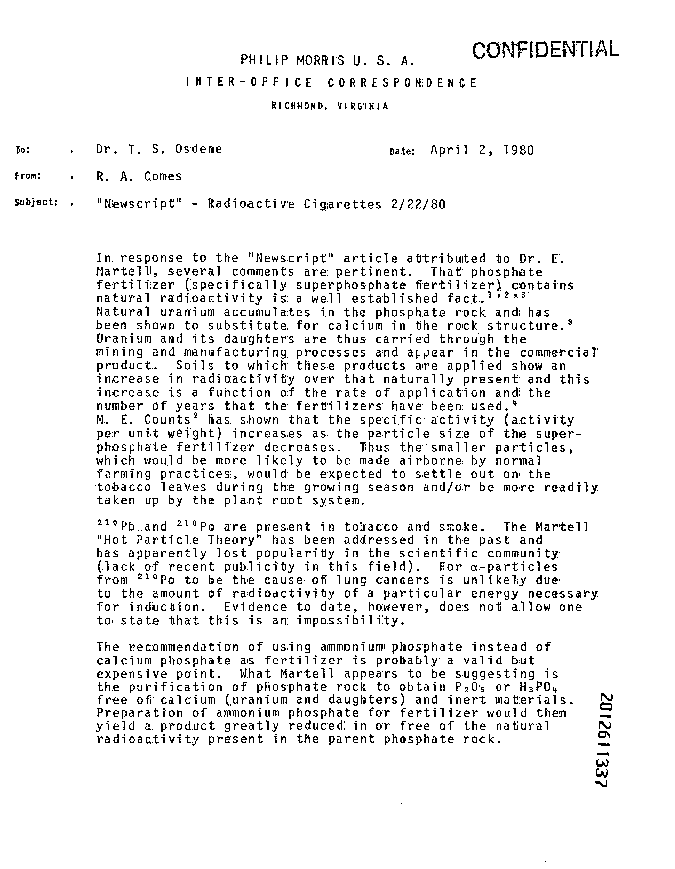
This was apparently known to major tobacco companies as far back as 1974, and by 1980 a means to remove the radioactive content was also known – by using ammonium phosphate as a fertilizer, instead of calcium phosphate. This idea is rejected on the basis of expense. This is clearly revealed in the two publically available leaked ‘smoking gun’ memos (reproduced below from the www.tobaccofreedom.com website) from Philip Morris in 1980.

The key quotes are:

"210- Pb and 210 -Po are present in tobacco and smoke."

..."For alpha particles from Po-210 to be the cause of lung cancers in unlikely due to the amount of radioactivity of a particular energy necessary of induction. Evidence to date, however, does not allow one to state this is an impossibility."

“The recommendation of using ammonium phosphate instead of calcium phosphate is probably a valid but expensive point”


So what can we conclude from all this?

Well, obviously tobacco companies primary concern is not public health, they are motivated purely by profits. If there is a model for irresponsible corporations – they are it. No surprise there. They denied tobacco was linked to lung cancer despite overwhelming evidence for years.

More worryingly perhaps is that Government’s in the UK, the US and everywhere else have failed to act on this – either by commissioning the appropriate research or by banning the use of the offending fertilisers. Ultimately it is the governments responsibility to monitoir these issues. They have had 20 years since this has been in the public domain and done nothing. Only now when some unrelated Russian political murder brings this obscure substance into the public eye are we beginning to get a hint of a debate and the potential for change. Lets be under no illusions, this saga is a grotesque failing of our public health infrastructure and a total scandal and disgrace for all governments concerned.

On a broader front serious issues are raised about tobacco control generally and why it has historically been so lax. Things are now improving – with long overdue controls on advertising and smoking in public spaces - and the public health impacts of smoking beginning to fall from their post war high. This is the result of more effective public health education and better legal regulation – something that should obviously underpin effective policy on all drugs. Cigarette tobacco can still have up to 15% non tobacco content and there are 400 or so permitted additives, most of them pretty obnoxious looking (the list is available from the Tobacco Manufacturers Association). Tobacco products should have ingredients listings the same as any other product we put in our bodies:

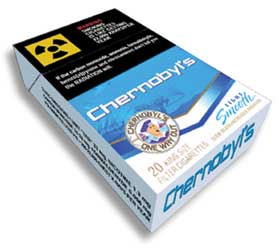
THIS PRODUCT CONTAINS RADIOACTIVE POLONIUM AND LEAD

Similar lessons need to be applied to alcohol control, still far too unregulated, particularly regards marketing and packaging, contributing to the rapid current rise in alcohol related ill health. Why no health warnings on alcohol products? why no ingredients listings? why do we so rarely see alcohol content in units on alcohol products?

Organic tobacco is fairly widely available which apparently doesn’t use the offending fertilisers. Its not good for you but may be marginally less bad. Alternatively, you could go all Swedish and use ‘snus’ or ‘bandits’ – tobacco which you hold in you mouth rather than smoke. It can give you mouth cancer but is generally far less risky (they have half our level of smoked tobacco in Sweden and half the level of lung cancer).

It is incumbent on the Government to regulate dangerous drugs properly. This must include basic harm reduction measures such as making sure tobacco full of radioactive carcinogens isnt being consumed by millions of people on a daily basis.

LATEST: 12.12.06

In a rather depressing development, apparently a government TV ad that highlights the fact that cigarettes contain polonium-210 has been pulled because of...wait for it...sensitivities to the Litvinenko family. How totally ridiculous. Just as we are about to be told something that has been known for decades, they decide to pull the ad for the most absurd of reasons.

Surely the sensitivities of the tens of 1000s of who have lost relatives to lung cancer, or may do in the future, are more important. Im quite sure Litvinenko would not want this ad being pulled as part of his legacy, and nor would his family. The Litvinenko story is an opportunity to broadcast this story and achieve something positive, not squirrel it away.


(mock cigarette packet photo from www.adbusters.org)

Monday, December 11, 2006

Losing Hearts and Minds in the War in Afghanistan

Despite widespread popular distrust of the use of herbicides in Afghanistan ("Afghans are deeply opposed to spraying poppies"), John Walters, the director of the U.S. Office of National Drug Control Policy is pressing the Afghan government to use the ground-sprayed herbicide, Roundup, on the illegal poppy crops. No mention is made in this article of any recompense or alternative crops which the Afghans might grow as profitably as opium nor of the inflammatory effect that wiping out people's livelihoods tends to create. Perhaps this will come later.

Wednesday, November 29, 2006

Law Enforcement Against Prohibition Talks in Scotland

The Scottish Herald here describes the campaigning by Jack Cole, spokesperson for the American based organisation Law Enforcement Against Prohibition (LEAP) in Scotland. Cole was invited by the chairman of the Strathclyde Police Federation who has noted that an ever increasing number of his members are calling for a root and branch reform of existing drug policy. This has elicited a restrained and even at times encouraging response from Tom Wood, the chair of the Scottish Association of Alcohol and Drug Action Teams. He very tentatively praised the police for their "courage" in inviting someone with such "radical" thoughts. However in the language of officialese "courage" often actually means foolhardiness. It's therefore hard to to reach a firm conclusion as to the real official response to Jack Cole's campaign. Nevertheless it's encouraging that LEAP are on the campaign trail in the UK.

Monday, November 27, 2006

Drug policy debating bonanza in the Times

The Times has embraced the recent flurry of drug policy stories with more enthusiasm than any of its broadsheet rivals. The ‘paper of record’ ran a pretty decent leader on the prohibition / legalisation debate, highly critical of the obvious failings of prohibition (it doesn’t work, it causes crime etc) and at least reasonably sympathetic to the ‘legalisation lobby’.

The leader, however, cautions that:

“It is tempting to hope that legalisation might cut out much of this violence and crime, by removing most of the profit margin from the drugs barons. However, while the legalisation lobby makes a persuasive case, there is a lack of clarity about how exactly its ideas would work in practice. If harm reduction is the aim, can one be sure that harm reduction would really be achieved? Reducing prices might remove incentives for criminals to supply the market. But would it not also result in an increase in addicts, because drugs would be even more easily available more cheaply? Would the act of legalising in itself send a powerful signal that Parliament is condoning drug taking? And might regulated companies acting above-board not be even more effective at marketing these substances than the drugs barons have been, with their access to more conventional methods of advertising? And if half of all beds for drug treatment are empty, as we report today, is the Government really doing all it can to treat addicts successfully?”


Most of these concerns are perfectly reasonable – and if these are the only obstacles to real reforms then the future is indeed looking bright. Transform are working hard with our colleagues in the UK and around the world to show how legal regulation of drug markets can ‘work in practice’, including how drug production and supply, specifically marketing can be appropriately controlled – far more effectively than with the completely deregulated criminal markets we have today. A detailed report on exactly this is due for pulication in 2007. To read discussion on the impact of policy changes on prevalence (beyond prohibitions transparent failure to reduce it), and the idea of using criminal law enforcement as a way of 'sending out messages', take a look at Transform’s report ‘After the war on drugs – Options for control’ which has a chapter addressing these very concerns. The leader’s final point about treatment beds is a bit randomly tacked on the end and has nothing to do with the legal status of drugs.

In an attempt at balance perhaps, the Times has also run a piece from a prohibitionist advocate, Patrick West, who is very against prescribing heroin to addicts - he want them locked up: it is unambiguously titled ‘The best treatment for heroin addicts? Arrest them’ . It’s a pretty sorry attempt at a counter-argument, more of a reactionary rant really, full of factual howlers and ill thought out arguments. He kicks off with saying Brian Paddick called for cannabis 'legalisation' in Brixton – Er, no he didn’t, he called for a shift in enforcement resources to more dangerous drugs, and non arrest for minor cannabis possession offences - which has now become national policy and cannabis use has fallen.

He then goes for the nonsensical old chestnut that:

Those who seek to legalise narcotics cry “the war on drugs has been lost”. One might as well also argue that “the war on murder has been lost” or that “the war on rape, theft, fraud, larceny and pyromania has been lost”. Like drug abuse, these are malaises that will always be with us, and no sane person believes they will ever be totally abolished.


You begin to think you’re listening to someone from Nixon’s 1970's ‘war on drugs’ when he starts talking about ‘narcotics’, and then out comes the old ‘why not legalise murder’ argument just to confirm it for you. The response to this simplistic and shortsighted argument is that murder is a so-called ‘crime’ in the classical sense because it harms others, whereas consenting adult drug use clearly is not.

Deftly avoiding such tricky distinctions we then hear West’s solution to the problem: “the most caring and the practical thing to do would be to prosecute and imprison users — to stop their habit.”

Brilliant.

Not content with advocating what we have already been doing, with disastrous consequences, for over 40 years, he is apparently completely ignorant of the fact that there are more drugs inside prison walls than there are outside. This is of course mainly because ‘caring’ and ‘practical’ views like his have led to prisons overflowing with drug addicts and drug dealers.

We are then confidently informed that: “Contrary to the media myth perpetuated by movies such as Trainspotting, the typical heroin addict is as likely to be a sensitive, fragile, middle-class graduate as an aggressive, working-class misfit from the roughest of council estates,” which is just incorrect. There are indeed heroin users form all social strata, but all the research, undisputed by anyone I’ve encountered before (see for example the Advisory Council on the Misuse of Drugs report – ‘Drugs and the Environment’) shows very clearly that problematic use is most concentrated in socially deprived communities.

His obvious confusion about addiction then takes a further nosedive into the ridiculous with the comment that: ‘Most people develop a life-debilitating heroin problem because they know that the arm of the law won’t seize them if they do.‘ which makes so little sense and is so far from reality that it hardly warrants a response. For the record the recent Science and Technology Committee inquiry was unable to find any evidence at all that the classification system was any kind of deterrence (in particular to problematic use of Class A drugs) and when challenged, the Government was unable to produce any resarch– not a single piece – to show any different.

The final section of his piece reveals that he has relatives that have died from heroin overdoses – a tragedy that has apparently prevented him from viewing the issue with any sort of rational objectivity. He slams advocates of pragmatic responses as ‘cold and callous’ (worse still: sociology students) before concluding with ‘the best way to prevent people illegally taking heroin is to prosecute those who do.’ Well Patrick, we’ve been doing exactly that since 1971, during which time the prisons have filled up with heroin addicts (the UK has Europe’s highest prison population), heroin use has risen from around 15,000 problem users, to around 300,000 (we have the highest level of drug use in Europe) and heroin users are dying in large numbers (we have the highest level of drug deaths in Europe), not to mention committing over half of all UK property crime. More of the same? Maybe, just maybe we should think about trying something different.

Now OK, perhaps I’m biased, but there was another opinion piece in the Sunday Times by Simon Jenkins, that argued the complete opposite to the West piece – it was titled ‘The really tough way to control drugs is to license them’. Ill leave you to decide for yourselves, but were I coming to this issue afresh and read both articles I suspect I would find the Jenkin’s take on this issue substantially more persuasive.

This is a live debate and reformers are winning it hands down.